
An EPS silo system is a storage and handling solution designed for expanded polystyrene (EPS) production facilities. It is mainly used to temporarily store pre-expanded EPS beads before they move to molding or other processing stages. A well-designed silo system helps manufacturers organize material flow, improve production efficiency, and maintain consistent EPS processing conditions.
In EPS manufacturing, proper storage is important because pre-expanded beads need suitable space, airflow, and controlled handling between production stages. An EPS silo system typically works with conveying, storage, and material discharge equipment to create a continuous production workflow. In this guide, we will explain its structure, working process, benefits, and common applications.
What Is an EPS Silo System?
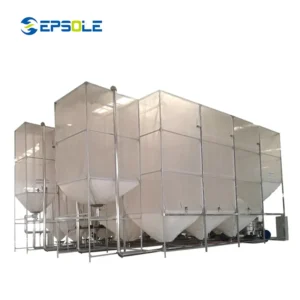

An EPS silo system is a group of connected silos, pipes, and blowers built to hold pre-expanded EPS beads before they move into the EPS molding process. Instead of storing EPS foam beads in loose bags or open bins, the silos keep them contained, clean, and ready for consistent production use.
The system typically includes multiple cylindrical silos arranged in a bank, connected by piping to the pre-expander on one end and the molding machines on the other. Beads move through the whole line automatically, which reduces manual handling and keeps material quality consistent from batch to batch.
EPS Silo System Components
Every EPS silo system, whether manual or automatic, shares a similar set of parts. Understanding these components helps you evaluate a system before buying or upgrading one for your production line. The main parts work together to move, hold, and release beads safely.
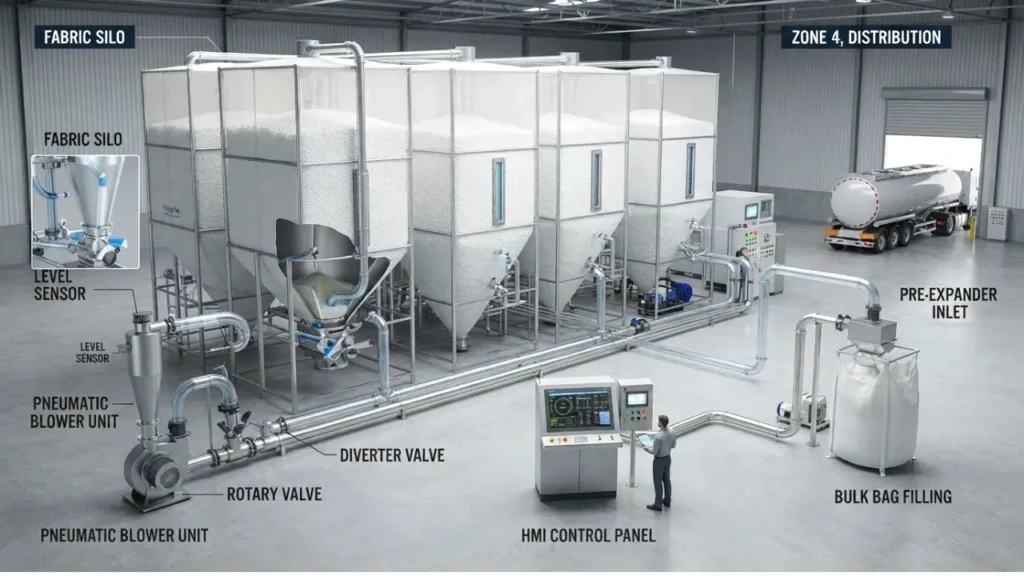
- Discharge valves: Positioned at the base of each silo, these valves release aged beads into feed lines toward the molding machines. Reliable valves prevent clogging and ensure a steady, measured flow that matches what each molding machine needs.
- Storage silos: Cylindrical tanks, usually made of galvanized steel, that hold pre-expanded beads during aging. Their size determines how much material a plant can age and store at once, directly affecting daily production capacity and how often the pre-expander needs to run.
- Conveying piping: Sealed DN150 or DN200 diameter pipework that carries beads pneumatically between the pre-expander, silos, and molding machines. Properly sized piping reduces bead damage from friction and keeps transfer speeds fast enough to avoid bottlenecks during peak production hours.
- Blowers and fans: These generate the airflow needed to push beads through the piping network. Correctly matched blower capacity prevents beads from settling inside pipes or arriving at the silo with excess moisture, which can affect later molding results.
- Control panel and sensors: Level sensors, timers, and a control panel let operators monitor aging progress and fill levels in real time. On automatic systems, this component also triggers loading and discharge cycles without needing manual valve operation.
How Does an EPS Silo System Work?
The process moves EPS beads through three main stages: transfer, storage and aging, then discharge. Each stage matters because raw EPS beads are sensitive to heat, humidity, and pressure. Getting the sequence right protects bead quality and keeps the entire foam production line running smoothly.
- Bead Transfer and Loading: Fresh beads leave the pre-expander while still warm and slightly moist. Pneumatic or mechanical conveyors carry them through sealed piping directly into the correct silo. This closed transfer path limits contamination, keeps beads from clumping in transit, and speeds up loading compared with manually carrying bags between machines.
- EPS Aging Process: Once inside the silo, beads need time to age. Aging lets the blowing agent inside each bead stabilize and allows trapped air to diffuse in, which improves the bead’s strength and moldability. Most systems hold beads for several hours, with exact timing depending on density and bead size.
- Material Handling and Discharge: After aging, the system releases beads into the molding machines on demand. Sensors track fill levels in each silo, so operators always know how much aged material is available. Automated discharge valves control the flow, preventing overfeeding and keeping downstream machines supplied continuously.
Manual vs Automatic EPS Silo Systems
Choosing between manual and automatic EPS silo systems depends on production volume, labor availability, storage requirements, and the desired level of process control. Both systems can store and handle pre-expanded EPS beads, but they differ considerably in operation, efficiency, investment, and automation.
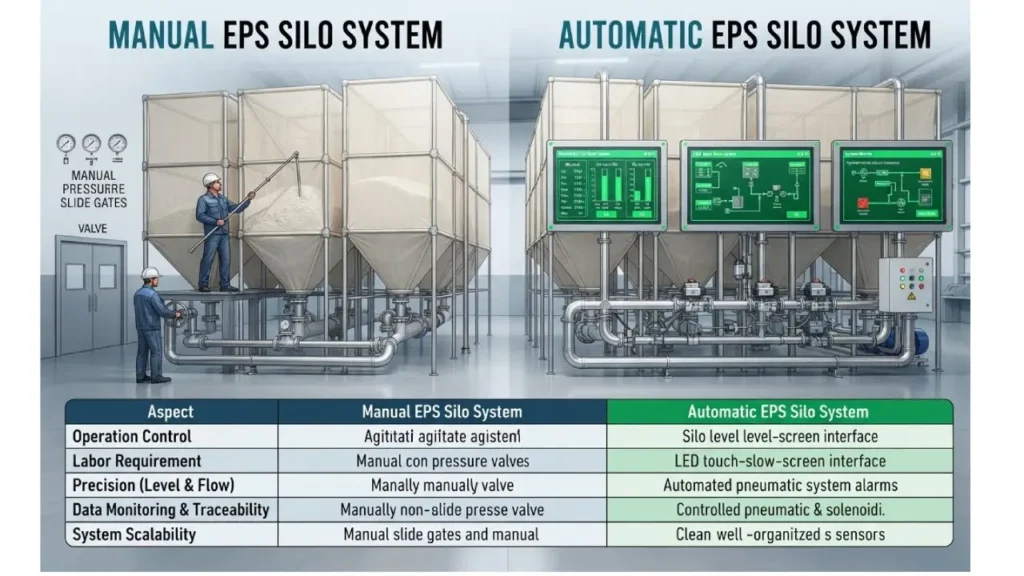
Understanding these differences helps manufacturers select the most suitable solution.
1. Operating Method
Manual EPS silo systems require workers to control material movement, filling, monitoring, and discharge operations. Operators typically need to inspect storage conditions and manage material transfer between production stages. Automatic systems use sensors, pneumatic conveying, valves, and control systems to manage these operations with significantly less manual intervention.
2. Labor Requirements
Manual systems require more operator involvement because workers need to monitor silo levels and control material handling processes. This can increase labor requirements as production capacity grows. Automatic EPS silo systems reduce routine manual work by using automated controls, allowing operators to focus more on production supervision, quality management, and equipment maintenance.
3. Production Efficiency
Manual EPS silo systems can work effectively for smaller production operations where material volumes are relatively limited. However, frequent manual handling may slow material flow when production increases. Automatic systems provide more consistent material transfer and storage management, making them better suited to continuous production lines and higher-volume EPS manufacturing environments.
4. Control and Monitoring
Manual silo systems depend largely on operator observation and physical inspection to monitor storage levels and material conditions. Automatic systems can integrate level sensors, control panels, alarms, and other monitoring components to provide more precise process control. This allows manufacturers to identify storage or conveying issues more quickly during production.
5. Initial Investment
Manual EPS silo systems generally require a lower initial investment because they use fewer automation components and control devices. Automatic systems typically cost more because they include sensors, electrical controls, pneumatic equipment, and automated material-handling components. However, the higher initial investment may be justified for manufacturers seeking improved long-term production efficiency.
6. Maintenance Requirements
Manual systems usually have fewer electronic and automated components, which can make their maintenance relatively straightforward. Automatic systems contain additional sensors, control units, valves, and conveying equipment that require regular inspection and servicing. However, proper maintenance of an automatic system can help maintain stable operation and reduce unexpected production interruptions.
7. Suitability for Production Scale
Manual EPS silo systems are generally more appropriate for small-scale operations, limited production volumes, or facilities where automation is not a major requirement. Automatic systems are better suited to medium- and large-scale EPS manufacturing facilities where continuous material handling, higher production capacity, and reduced operator intervention are important considerations.
Here are some differences between manual EPS silo system and automatic EPS silo system
| Aspect | Manual EPS Silo System | Automatic EPS Silo System |
|---|---|---|
| Operating Method | Manually controlled | Automatically controlled |
| Labor Requirements | Higher | Lower |
| Production Efficiency | Suitable for smaller operations | Better for continuous, high-volume production |
| Control and Monitoring | Mainly operator-based | Sensors and automated controls |
| Initial Investment | Lower | Higher |
| Maintenance | Simpler components | More components to maintain |
| Production Scale | Small-scale or limited production | Medium- to large-scale production |
| Material Handling | More manual intervention | Automated conveying and discharge |
| Process Consistency | Depends more on operators | Generally more consistent |
| Automation Level | Low | High |
How to Choose the Right EPS Silo System?
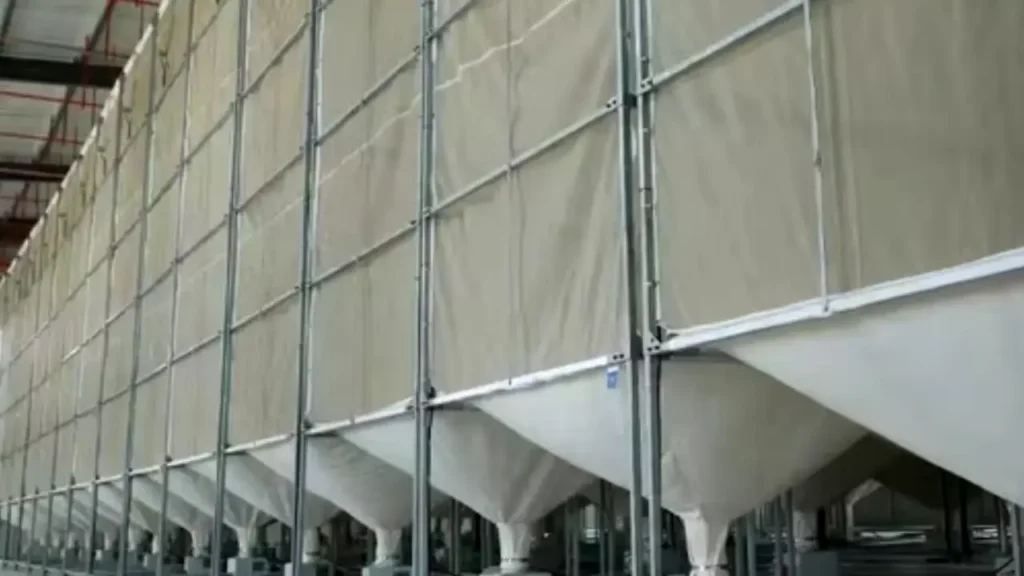
Choosing the right EPS silo system is important for maintaining efficient material storage, stable production, and smooth EPS bead handling. The best solution depends on production capacity, storage volume, factory layout, automation requirements, and budget.
By evaluating these factors carefully, manufacturers can select a silo system that supports reliable operations and future production needs.
Production Capacity: Consider your current and expected EPS production volume before selecting a silo system. The storage capacity should match the amount of pre-expanded EPS beads generated during production without creating unnecessary bottlenecks. We recommend allowing sufficient capacity for continuous operation while considering future increases in production demand.
Silo Storage Capacity: Determine how much pre-expanded EPS material needs to be stored between expansion and molding processes. A properly sized silo provides adequate temporary storage and helps maintain smooth material flow. Avoid choosing a system that is too small, as frequent material transfers can interrupt production efficiency.
Factory Space: Evaluate the available floor area and vertical space before purchasing an EPS silo system. Silo dimensions, conveying equipment, access routes, and maintenance areas should all fit comfortably within the facility. Proper planning helps avoid installation difficulties and allows operators to access equipment safely for inspection and servicing.
Automation Level: Decide how much manual intervention your production process can accommodate. Manual systems may suit smaller facilities with limited production, while automatic systems can provide more efficient material handling for larger operations. Consider sensors, pneumatic conveying, automatic valves, and control systems when higher automation and process consistency are required.
Material Conveying System: Check how EPS beads will move between the pre-expander, silo, and molding machines. A suitable conveying system should provide smooth and reliable material transfer while minimizing unnecessary damage or disruption. Pneumatic conveying is commonly integrated into automated systems to improve material handling efficiency and production continuity.
Silo Material and Construction: Pay attention to the materials and structural design used for the silo. The system should provide adequate durability for continuous industrial operation and be suitable for the characteristics of EPS beads. Strong construction, appropriate connections, and reliable discharge components can contribute to long-term operating stability.
Discharge Requirements: Consider how stored EPS beads will be removed from the silo and delivered to the next production stage. The discharge system should provide controlled material flow and work effectively with downstream equipment. Proper discharge design helps reduce blockages, inconsistent feeding, and unnecessary manual intervention during production.
Control and Monitoring: For automated production lines, consider whether the silo system provides suitable monitoring and control functions. Level sensors, alarms, control panels, and automated valves can help operators monitor storage conditions and manage material movement. These features can improve process visibility and make routine operation easier.
Maintenance and Service: Evaluate how easily the silo system can be inspected, cleaned, repaired, and maintained. Choose equipment with accessible components and reliable construction to simplify routine servicing. You should also consider the supplier’s technical support, spare parts availability, installation assistance, and after-sales service before making your final decision.
Conclusion
An EPS silo system plays a central role in producing consistent, high-quality expanded polystyrene products. By controlling how beads are transferred, aged, and discharged, these systems help manufacturers reduce waste and keep production running smoothly.
Whether you choose a manual or automatic setup depends on your plant’s volume and budget, but either option should be sized around your actual daily bead throughput and factory layout.