
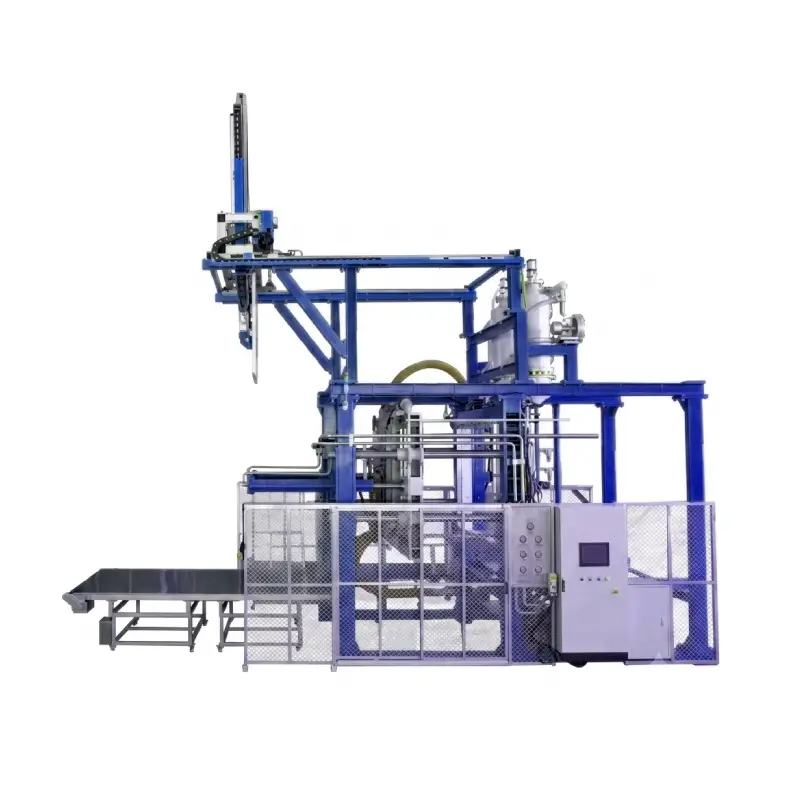
Custom PLC Control EPS Machine from China
We provide custom PLC control EPS machines, designed for automated, efficient, and reliable EPS foam production. Our machines feature advanced PLC systems for precise process management, easy operation, and consistent product quality. We offer flexible configurations, durable construction, and comprehensive technical support to meet your manufacturing requirements.
Get PLC Control EPS Machine Wholesale
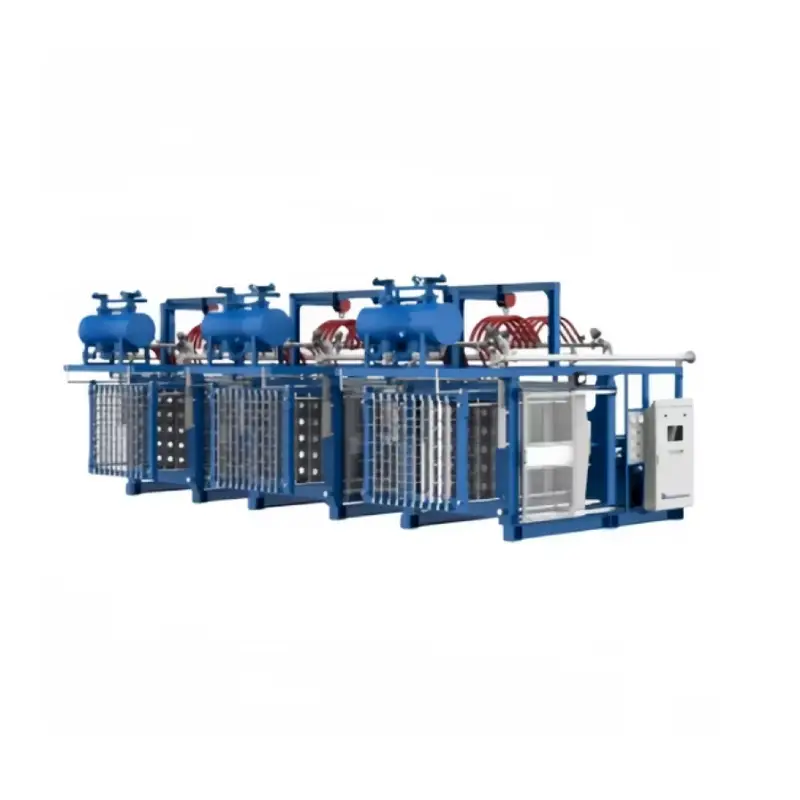
- Packaging industry applications — PLC control EPS machines are widely used for producing protective packaging inserts for electronics, appliances, and fragile goods, ensuring consistent density, precision molding, and reduced product damage during transportation.
- Construction insulation boards — These machines manufacture EPS insulation panels used in walls, roofs, and floors; PLC automation ensures uniform thickness, stable thermal performance, and energy efficiency for modern building construction projects.
- Cold chain logistics packaging — EPS boxes for seafood, vaccines, and fresh food rely on PLC controlled machines to maintain tight temperature resistance performance, improving reliability in long-distance refrigerated transportation and storage systems.
- Automotive component protection — Automotive parts such as bumpers, dashboards, and delicate assemblies are safely packaged using EPS molded shapes; PLC systems guarantee repeatable accuracy and high production efficiency for industrial scale supply.
- Industrial equipment cushioning — Heavy machinery and precision instruments require shock-absorbing EPS components; PLC control ensures exact molding shapes and density control, providing stable cushioning performance and minimizing vibration damage during handling.
Customize Your Desired PLC Control EPS Machine
Control system customization
We provide Siemens or Mitsubishi PLC options with touchscreen interfaces, allowing operators to easily adjust parameters. We enable precise control of temperature, pressure, and cycle time, ensuring stable production, reduced errors, and optimized efficiency for different EPS product specifications and complex manufacturing requirements.
Mold configuration flexibility
We support customized mold sizes and shapes for packaging, insulation boards, and industrial parts. We design quick-change mold systems that reduce downtime, improve production versatility, and allow manufacturers to switch between different EPS product types efficiently while maintaining high molding accuracy and consistent density.
Heating and steam system optimization
We integrate adjustable steam and heating systems to ensure uniform expansion and fusion of EPS beads. We help balance energy consumption and product quality, improving surface finish, reducing material waste, and ensuring consistent density control for large-scale continuous production environments.
Automation and auxiliary integration
We offer optional automatic feeding, vacuum systems, and robotic demolding solutions. We enhance production line efficiency by reducing manual labor, improving cycle speed, and ensuring safer operations, while maintaining stable output quality and supporting fully automated EPS manufacturing workflows for modern factories.
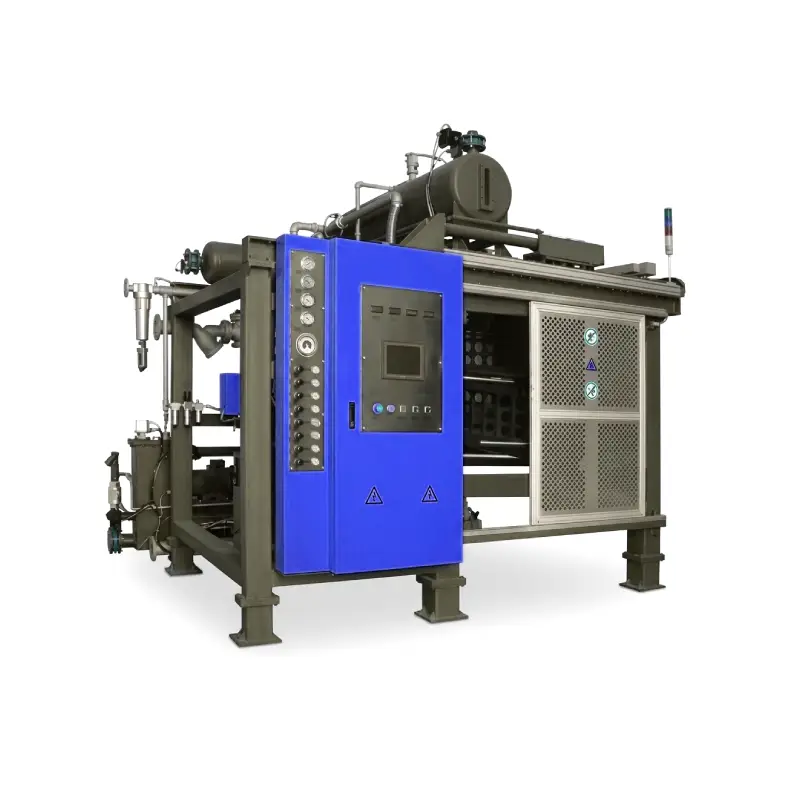
PLC-controlled EPS molding machine
PLC-controlled EPS molding machine, we offer advanced automation for stable and efficient production of expanded polystyrene products. Our system ensures precise temperature, pressure, and cycle control, improving molding accuracy and reducing waste. It is widely used for packaging, insulation boards, and industrial components with consistent quality and high output efficiency.
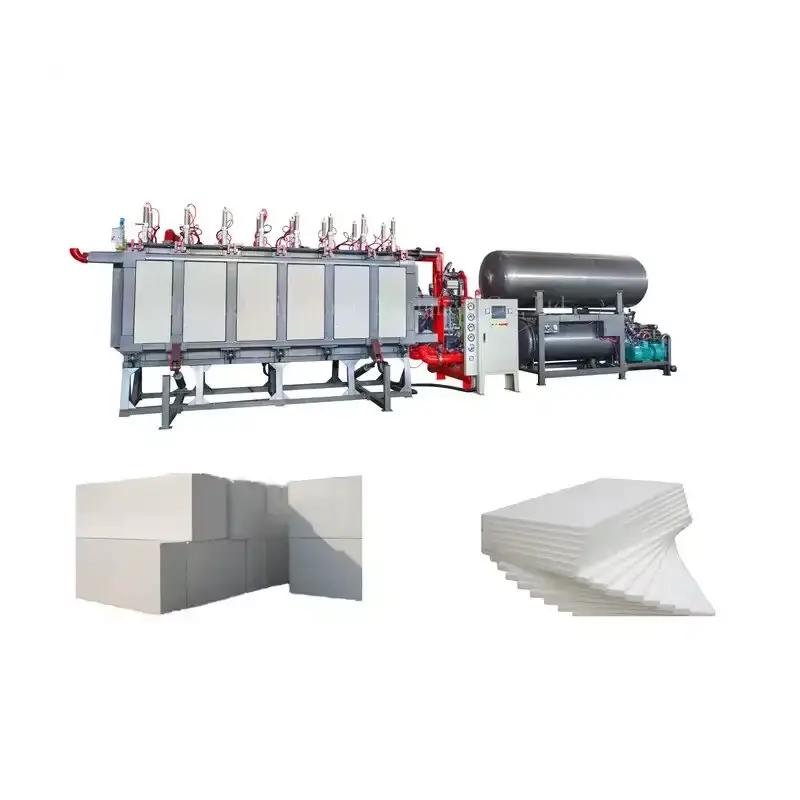
vacuum pLC-controlled EPS block molding machine
Vacuum cooling PLC controlled EPS expandable polystyrene block molding machine, we offer high-efficiency production with stable density control and fast cooling performance. It ensures uniform block quality, energy-saving operation, and precise automation. Suitable for packaging and construction industries, our machine delivers consistent output, reliable performance, and easy PLC-based intelligent operation.
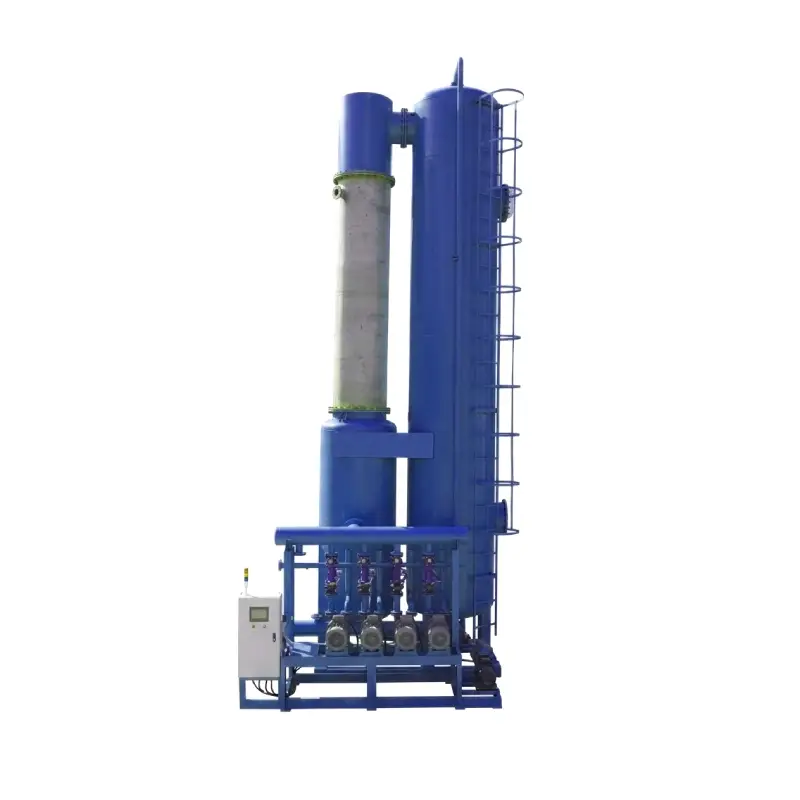
PLC control EPS pre expander machine
PLC control EPS pre expander machine, we offer high-precision automatic expansion of polystyrene beads with stable density control and efficient steam regulation. It ensures consistent material quality, energy-saving operation, and reliable production performance. Suitable for packaging and insulation industries, our machine delivers smooth operation and intelligent PLC-based process management.
PLC Control EPS Machine FAQs
What is a PLC Control EPS Machine?
A PLC Control EPS Machine is an automated system used to manufacture expanded polystyrene (EPS) products such as EPS packaging, blocks, insulation panels, and protective molds. It uses a programmable logic controller (PLC) to manage key production parameters like temperature, pressure, steam flow, and cycle time. This ensures stable operation, consistent product density, and high molding accuracy throughout the production process.
By integrating advanced automation, the machine improves efficiency and reduces manual labor in EPS manufacturing. Operators can easily adjust settings through a touchscreen interface, allowing flexible production for different product sizes and shapes. It is widely used in packaging, construction insulation, cold chain logistics, and industrial protection applications where lightweight, durable, and shock-absorbing materials are required.
What is a PLC Control EPS Machine used for?
A PLC Control EPS Machine is widely used in modern manufacturing to produce expanded polystyrene products with high precision and automation. It plays a key role in packaging, construction, and insulation industries by ensuring consistent density, stable molding quality, and efficient production.
The PLC system enhances control, reduces manual work, and improves overall operational safety and output performance.
Protective packaging production — We use PLC controlled EPS machines to manufacture packaging blocks for electronics, appliances, and fragile goods. We ensure consistent shape accuracy, shock absorption performance, and lightweight protection, helping reduce transport damage while improving efficiency in large-scale industrial packaging operations.
Construction insulation materials — We produce EPS insulation boards used in walls, roofs, and floors for energy-efficient buildings. We ensure uniform density, strong thermal resistance, and stable structural performance, supporting modern construction projects that require lightweight, cost-effective, and environmentally efficient insulation solutions.
Cold chain logistics packaging — We create EPS boxes for seafood, vaccines, and fresh food transportation. We ensure precise temperature resistance, durability, and lightweight design, helping maintain product freshness and safety during long-distance refrigerated storage and distribution across global supply chains.
Industrial component cushioning — We manufacture EPS molds for machinery, automotive parts, and precision instruments. We ensure high shock absorption, repeatable accuracy, and reliable protection, reducing vibration damage during handling, storage, and shipping in demanding industrial environments.
Household appliance protection — We produce EPS packaging for refrigerators, air conditioners, and washing machines. We ensure strong impact resistance, stacking strength, and stable molding quality, helping protect large home appliances during transportation and improving logistics efficiency for manufacturers and distributors.
How Does the PLC System Improve EPS Production?
A PLC system significantly improves EPS production by providing intelligent automation and precise control over the entire molding process. It helps manufacturers achieve stable output, consistent product quality, and reduced manual intervention. By optimizing key parameters such as temperature, pressure, and cycle time, the PLC system ensures efficient production, lower energy consumption, and improved operational safety across different EPS manufacturing applications.
Precise process control — We use PLC systems to accurately regulate steam pressure, heating temperature, and cooling time. We ensure every production cycle remains consistent, reducing product defects and maintaining uniform density, shape accuracy, and stable quality across large-scale EPS manufacturing operations.
Improved production efficiency — We optimize cycle timing and automation sequences through PLC programming. We reduce idle time, speed up molding cycles, and increase output capacity, helping manufacturers achieve higher productivity while maintaining stable performance and consistent product quality in continuous EPS production lines.
Reduced labor dependency — We automate key production steps such as feeding, molding, and demolding. We minimize manual intervention, reduce operational errors, and improve workplace safety, allowing factories to operate with fewer workers while maintaining high efficiency and reliable EPS product consistency.
Energy saving optimization — We control steam usage and heating cycles intelligently through PLC logic. We reduce energy waste, stabilize power consumption, and improve thermal efficiency, helping manufacturers lower production costs while maintaining high-quality EPS output in long-term industrial operations.
What Industries Commonly Use Plc Controlled EPS Machine?
PLC controlled EPS machines are widely used across industries that require lightweight, protective, and insulating materials.
In the packaging industry, they are used to produce protective foam for electronics, appliances, and fragile goods, ensuring safe transportation.
In construction, they manufacture EPS insulation boards for walls, roofs, and flooring to improve energy efficiency and thermal performance in buildings.
They are also essential in cold chain logistics for producing insulated boxes used in seafood, vaccines, and fresh food transportation. The automotive industry uses EPS components to cushion and protect parts during shipping.
Additionally, household appliance manufacturers rely on EPS packaging to protect refrigerators, air conditioners, and washing machines during storage and delivery.