
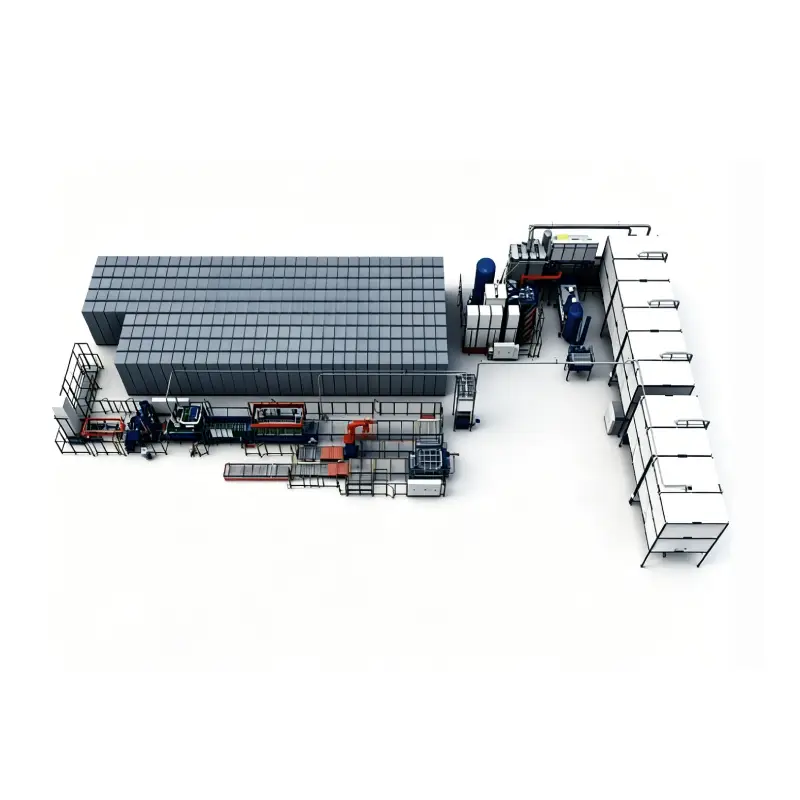
EPS Manufacturing
We offer professional manufacturing solutions for your EPS product needs. Explore our reliable production capabilities to ensure your project receives excellent results.
EPS Manufacturing Process
EPS recycling machine is playing a crucial role in reducing waste and promoting sustainability. We can offer the premium EPS recycling machine to meet all of your requirements, here we can provide you all to support EPS recycling machine.
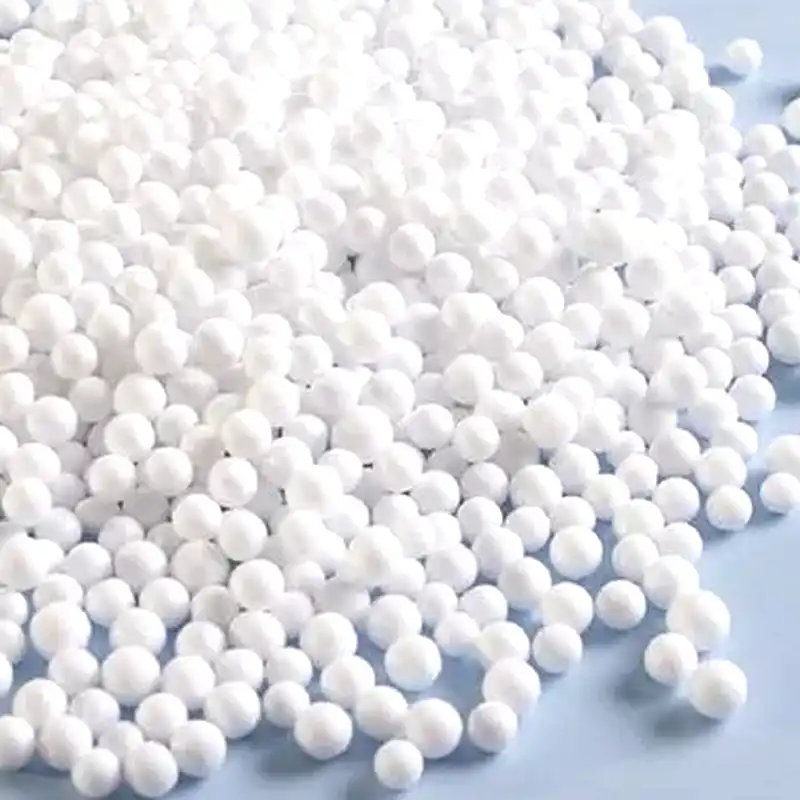
The EPS manufacturing process starts with polystyrene beads, derived from petroleum and natural gas byproducts. These tiny beads are the building blocks of EPS.
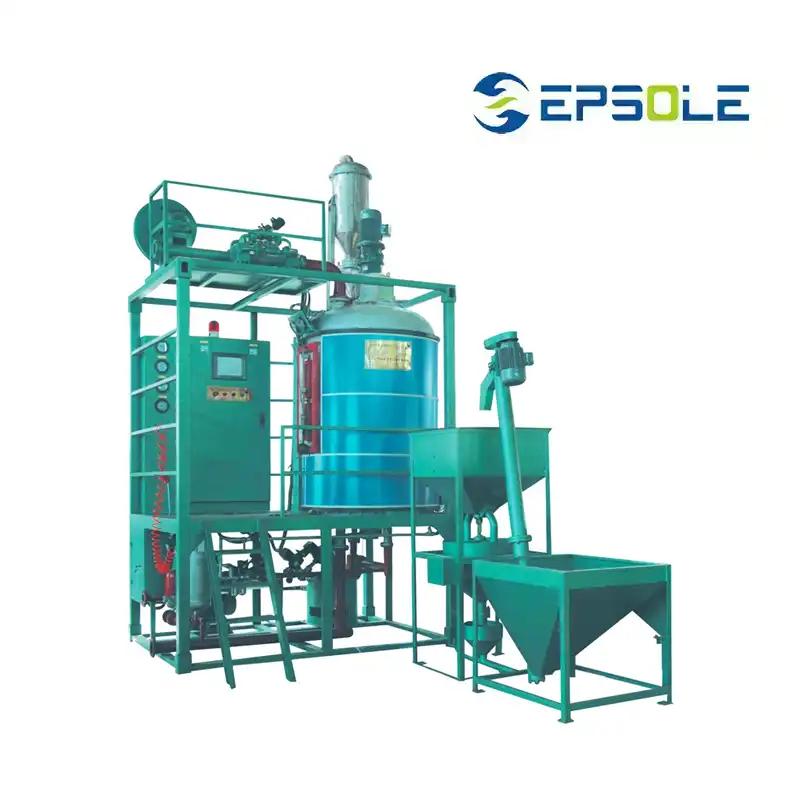
- These eps beads enter a pre-expander machine, where they meet their transformation.
- Inside, the beads are exposed to steam (sometimes with air) which causes them to soften and pre-expand up to 40 times their original size.
- This pre-expansion is crucial because it creates the air pockets that give EPS its signature lightweight and insulating properties.
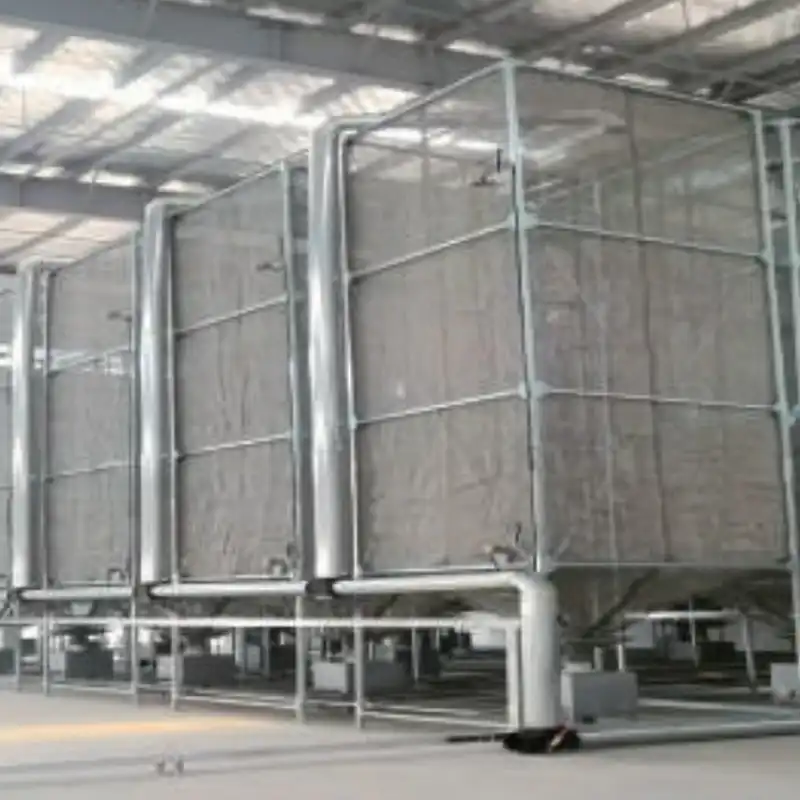
- After pre-expansion, the beads, now significantly larger and lighter, are transferred to a storage silo.
- This allows them to age for a few hours. This aging period helps the beads cool down and stabilize, ensuring they are ready for the next step.
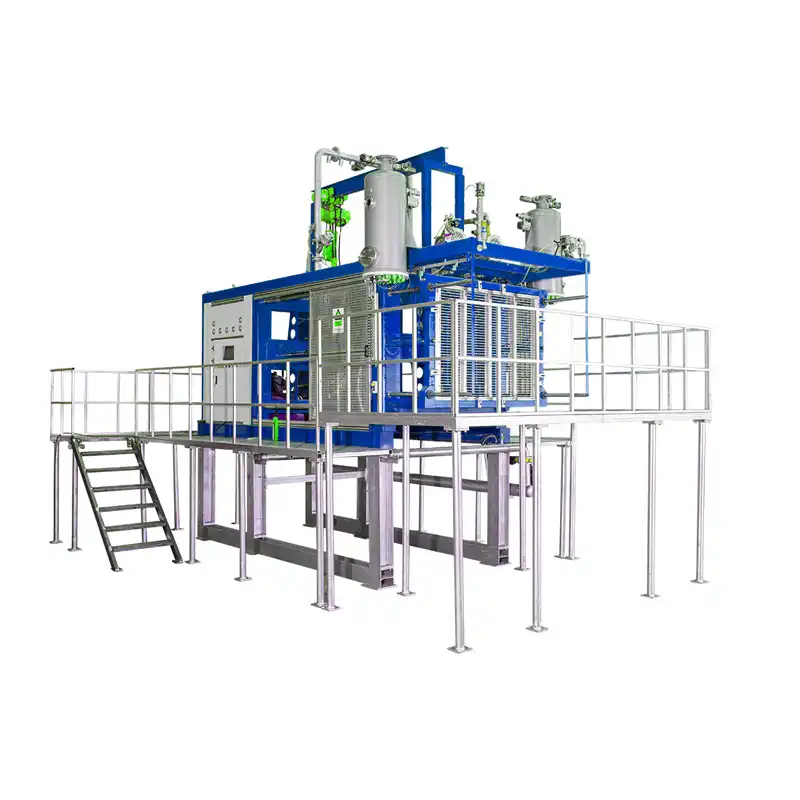
- Depending on the desired final product, some manufacturers might use an EPS shape molding machine.
- This machine injects steam directly into the pre-expanded beads, causing them to further expand and take on a specific pre-shaped form.
- This pre-shape can then be fed into the block molding machine for final shaping.
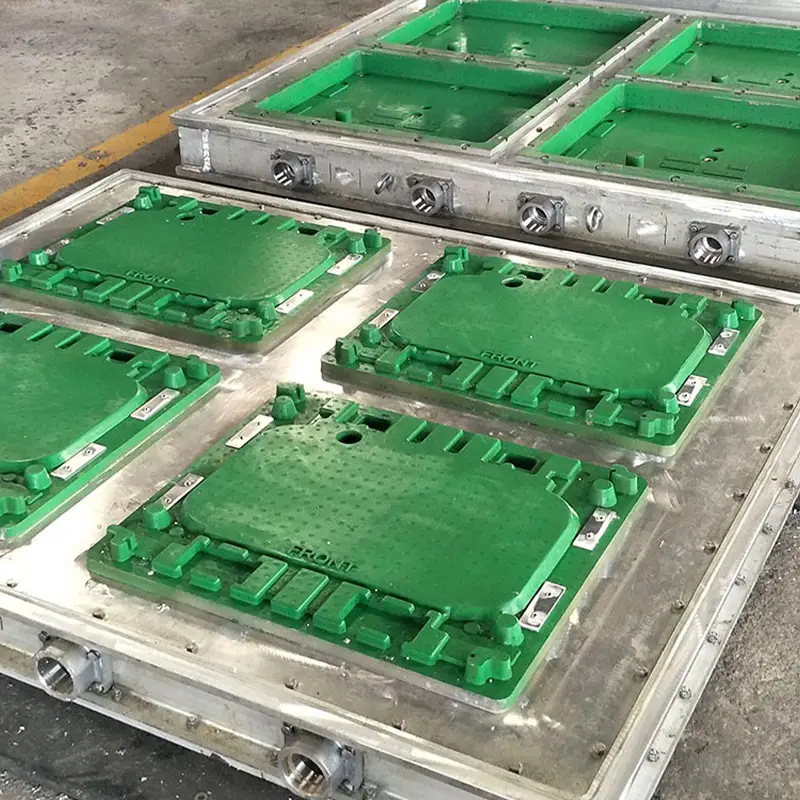
The heart of the molding process is the EPS mold. This mold is a hollow cavity designed to create the final shape of the EPS product.
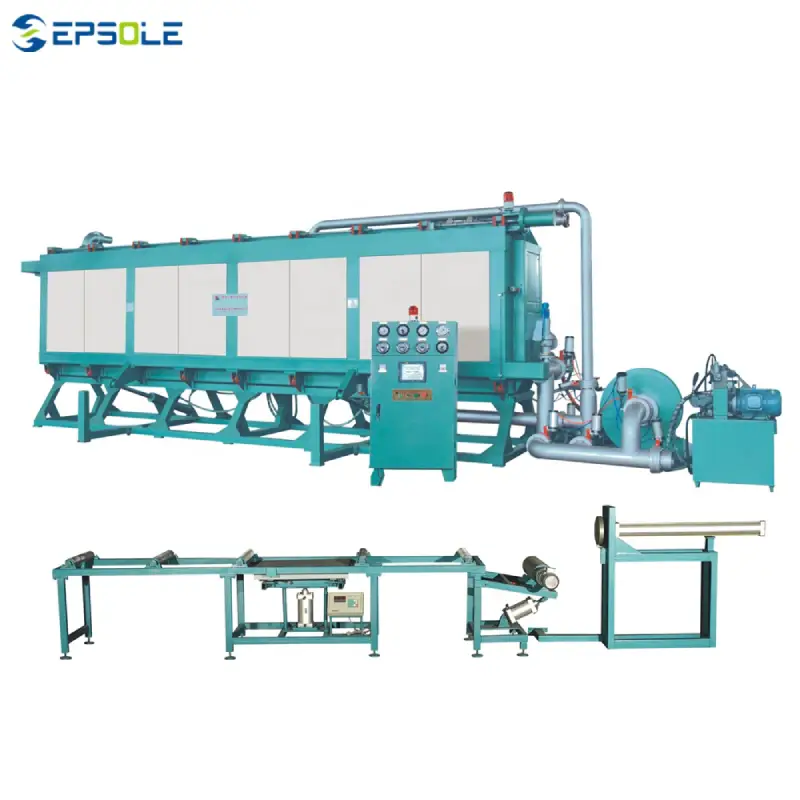
- The aged pre-expanded beads (or pre-shaped beads if the shape molding machine was used) are then fed into the EPS block molding machine.
- Inside the machine, steam is again used to further expand the beads and fuse them together. The mold cavity dictates the final shape of the EPS block.

- Once the molding cycle is complete, the EPS block is cooled with air or water to solidify its shape.
- This cooled EPS block can then be cut into desired shapes and sizes using hot wires, saws, or CNC machines.
- The final product can be everything from protective packaging materials and building insulation to helmet liners and surfboard blanks.
EPS Foam Manufacturing Process
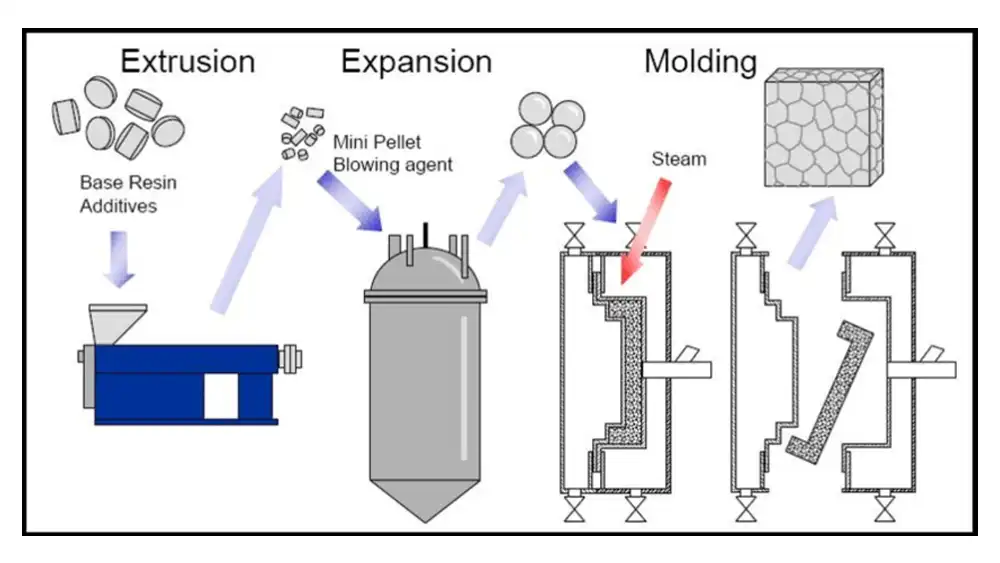
The production of EPS foam involves transforming small polystyrene beads into lightweight, durable foam blocks used for packaging, insulation, and more.
This process includes pre-expansion, aging, molding, cooling, cutting, and optional finishing steps. Each stage ensures the foam achieves the right density, shape, and strength for its intended use.
Step 1: Pre-expansion
Tools Needed
Steam generator
Air supply system
The process starts with tiny polystyrene beads, which are loaded into a pre-expander machine. Steam is applied to soften the beads, causing them to expand up to 40 times their original size. This expansion creates air pockets, giving EPS its lightweight and insulating properties that make it so versatile.
After EPS foam expansion, the beads are slightly sticky and need time to stabilize. This step ensures uniformity in size and density, which is critical for consistent quality in later molding stages. Proper pre-expansion determines how well the beads will fuse during molding, affecting the final block’s strength and structure.
Step 2: Storage and Aging
Pre-expanded beads are transferred to a storage silo where they cool down and settle. Aging allows trapped air to stabilize within the beads, preventing deformation during molding. This pause also helps in balancing the moisture content, ensuring the beads maintain their expanded structure without collapsing under pressure.
During aging, the EPS foam beads continue to increase slightly in volume. This gradual expansion ensures uniformity for molding, reducing the risk of voids or weak spots in the final product. Proper aging improves fusion between beads and contributes to consistent thermal and mechanical properties of EPS blocks.
Step 3: Shape Molding (Optional)
Some manufacturers use shape molding to pre-form the EPS before block molding. Steam is injected into the pre-expanded beads, causing them to expand further and take a specific shape. This step increases efficiency by reducing the amount of time needed in the main mold.
Pre-shaped EPS beads are easier to handle and fill molds more evenly. This method is particularly useful for complex or custom products, as it ensures the final block has fewer gaps and better surface finish. The pre-shaped process can also save material and energy in large-scale production.
Step 4: Molding
Molding is where EPS foam takes its final form. Beads are placed into either vertical or horizontal molds. Steam is applied to cause the beads to expand further and fuse together. Vertical molding uses gravity for denser blocks, while horizontal molding relies on compression for even density distribution.
During EPS molding process, precise control of temperature and pressure is critical. It ensures beads fully expand and adhere without gaps. The mold design dictates the block dimensions and density, and proper molding produces high-quality EPS suitable for insulation, packaging, or structural uses.
Step 5: Cooling
After molding, EPS blocks are cooled using air or water. Cooling solidifies the foam structure and prevents deformation. Proper cooling ensures that the block maintains its shape and density for subsequent cutting and finishing.
Cooling must be uniform to avoid internal stresses or warping. Rapid cooling can cause cracking, while slow cooling may lead to uneven density. Controlled cooling preserves the mechanical and thermal properties that define high-quality EPS foam.
Step 6: Cutting
Cooled EPS blocks are cut into required shapes and sizes. Methods include hot wires for precise cutting, saws for thicker blocks, and CNC machines for complex or large-scale designs. Each technique ensures minimal material waste and clean edges.
Cutting also prepares blocks for their specific applications. Accurate cutting maintains consistent thickness, density, and dimensions, which are crucial for insulation panels, packaging inserts, and decorative or functional foam components.
Step 7: Finishing (Optional)
Finishing may include coating or laminating EPS blocks. Coatings can provide water resistance or enhanced durability, while lamination can bond multiple blocks into larger or custom-shaped assemblies.
Optional finishing steps expand the versatility of EPS foam. They allow products to meet industry-specific requirements, such as extra strength for construction panels or decorative finishes for retail packaging, enhancing both performance and appearance.
Vertical vs Horizontal Block Molding Machines in EPS Manufacturing
Both vertical and horizontal block molding machines are used in EPS manufacturing to create the final shaped blocks from pre-expanded beads. However, they differ in their design, operation, and suitability for different EPS applications:
-1.webp)
Design:
The mold cavity is positioned vertically.
The pre-expanded beads are typically fed from the top of the machine.
Operation:
The beads fall under gravity into the mold cavity.
Steam is introduced from the bottom, causing the beads to expand and fill the mold.
After the molding cycle, the bottom of the mold opens, and the finished EPS block is released downwards.
Suitability:
More efficient for denser EPS blocks due to the weight of the beads aiding in packing the mold cavity.
Offers greater molding pressure due to the vertical arrangement, allowing for denser products.
May be better suited for taller block shapes as the vertical orientation provides more molding space.
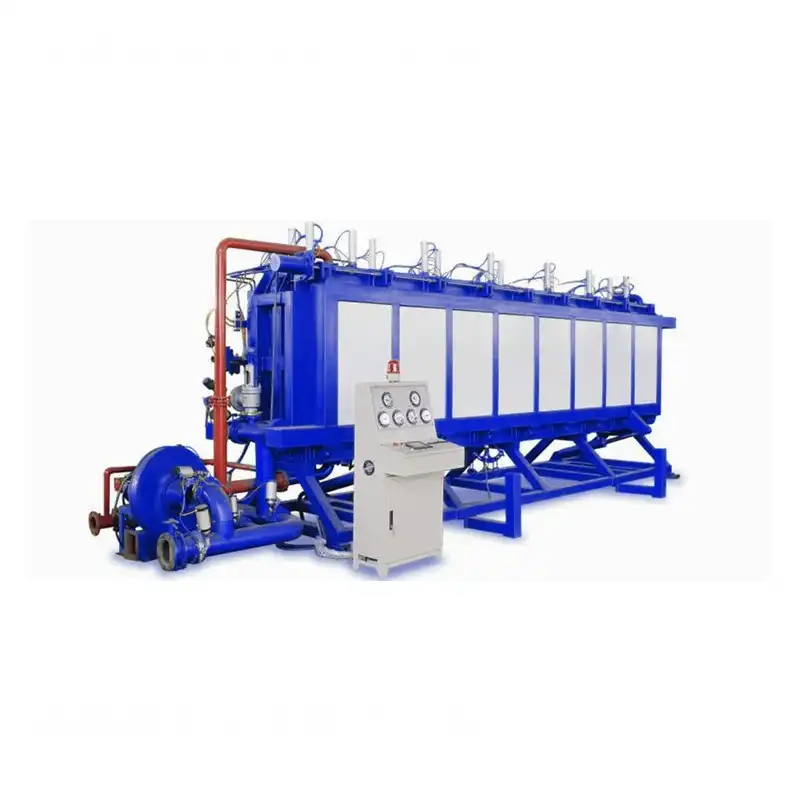
Design:
The mold cavity is positioned horizontally.
The pre-expanded beads are fed into one side of the closed mold.
Operation:
Steam is introduced, causing the beads to expand and fill the mold cavity.
A movable plate or ram compresses the beads to ensure proper density.
After the molding cycle, the mold opens horizontally, and the finished EPS block is removed.
Suitability:
More efficient for lower-density EPS blocks as the packing relies on steam pressure and the movable plate.
Offers good control over uniform density throughout the block due to the compression mechanism.
May be better suited for wider block shapes as the horizontal design allows for more mold width.
| Feature | Vertical Block Molding Machine | Horizontal Block Molding Machine |
|---|---|---|
| Mold Cavity Position | Vertical | Horizontal |
| Bead Feeding | From Top | From Side |
| Filling Mechanism | Gravity + Steam | Steam + Compression Plate |
| Suitability for Density | Denser EPS | Lower Density EPS |
| Molding Pressure | Higher | Controlled by Compression Plate |
| Block Shape Preference | Taller Blocks | Wider Blocks |
Choosing the Right EPS Molding Machine:
The choice between a vertical and horizontal block molding machine depends on the desired EPS product characteristics:
- Density: For denser blocks, a vertical machine is preferred.
- Shape: Taller blocks favor a vertical machine, while wider blocks may be better suited for horizontal molding.
- Production Speed: Both machines offer similar cycle times.
Ultimately, consulting with an EPS machinery manufacturer will help you determine the best machine for your specific production needs and product requirements.
FAQs about EPS Manufacturing
What is EPS foam?
EPS foam, or expanded polystyrene foam, is a lightweight, rigid material made from small polystyrene beads that are expanded and fused together. It is known for its excellent insulating properties, shock absorption, and structural strength, making it ideal for packaging, construction, and craft applications. Its low density and versatility allow it to be molded into various shapes and sizes.
EPS foam is widely used in industries ranging from food packaging to building insulation. It is durable, moisture-resistant, and can be easily cut or shaped to meet specific design requirements.
EPS foam is recyclable, which makes it an environmentally friendly choice for many applications while providing cost-effective and efficient solutions.
What are EPS foam benefits?
EPS foam offers numerous advantages that make it a popular choice across industries. Its lightweight structure, insulating properties, and shock absorption capabilities allow it to protect products, reduce energy costs, and provide durable support. Versatile and easy to shape, EPS foam is ideal for packaging, construction, and custom designs.
- Lightweight: EPS foam is extremely light, reducing transportation costs and making handling easier. Its low density does not compromise strength, allowing it to support products safely. Lightweight properties also improve energy efficiency in buildings, as less material is required for insulation without sacrificing performance.
- Excellent insulation: EPS foam provides superior thermal insulation, helping maintain temperature in buildings or packaged products. Its closed-cell structure reduces heat transfer, which lowers energy consumption. This property makes it ideal for cold storage, food packaging, and energy-efficient construction applications where temperature control is critical.
- Shock absorption: EPS foam absorbs impact effectively, protecting fragile or sensitive items during shipping. Its ability to distribute force minimizes damage, making it perfect for electronics, glassware, and other delicate products. This feature also makes it useful in protective gear and automotive components.
- Moisture resistance: EPS foam resists water absorption, preventing mold, rot, or deterioration in damp environments. This property makes it suitable for construction insulation, packaging, and outdoor applications. Moisture resistance ensures longevity and maintains the foam’s structural integrity over time, even in humid conditions.
- Customizable and versatile: EPS foam can be molded, cut, or shaped to meet specific requirements. Its versatility allows for unique designs, structural panels, and specialized packaging. This adaptability makes EPS foam a practical solution for creative applications, reducing material waste while delivering functional and efficient results.
What is the raw material used in EPS manufacturing?
The primary raw material used in EPS manufacturing is polystyrene, a type of thermoplastic polymer derived from petroleum. These tiny polystyrene beads are the foundation of EPS foam.
When heated with steam, they expand and fuse together, creating lightweight, durable foam with excellent insulating and protective properties.
Polystyrene beads: Polystyrene beads are small, solid pellets that serve as the starting material for EPS foam. Their uniform size ensures consistent expansion during the pre-expansion and molding stages. Quality beads are essential for producing EPS blocks with reliable density, strength, and thermal insulation performance.
Pentane (blowing agent): Pentane is often added to polystyrene beads as a blowing agent. When heated, pentane vaporizes, causing the beads to expand. This controlled expansion forms the air pockets that give EPS foam its lightweight and insulating properties, ensuring the final product meets industry standards.
Additives (optional): Certain additives can be mixed with polystyrene beads to enhance EPS foam properties. These may include flame retardants, colorants, or anti-static agents. Additives allow manufacturers to customize foam for specific applications, improving safety, appearance, or performance while maintaining the material’s versatility.
Water (for steam generation): Water is used indirectly in the form of steam during pre-expansion and molding. Steam softens the beads and triggers expansion. Proper control of steam temperature and pressure is crucial to achieve uniform bead growth, optimal density, and high-quality EPS foam.
Air (for aeration and cooling): Air is also an important component in EPS production. It helps cool and stabilize expanded beads in storage silos and can be used during the cutting and finishing processes. Proper aeration prevents bead collapse and maintains consistent foam quality.
How does the EPS manufacturing process work?
The EPS manufacturing process transforms small polystyrene beads into lightweight, durable foam blocks through a series of controlled steps. These steps include pre-expansion, aging, molding, cooling, cutting, and optional finishing.
Each stage ensures the foam achieves the right density, shape, and strength for applications in packaging, insulation, and other industries.
Pre-expansion: Polystyrene beads are loaded into a pre-expander machine, where steam softens them and causes them to expand up to 40 times their original size. This expansion forms air pockets, giving EPS its lightweight structure and excellent insulating properties. Proper pre-expansion is critical for uniform bead size and density.
Aging: After pre-expansion, beads are stored in silos to cool and stabilize. Aging allows trapped air to settle and moisture levels to balance, ensuring the beads maintain their expanded shape. This step prevents deformation and prepares the beads for consistent, high-quality molding results.
Molding: Pre-expanded beads are placed into vertical or horizontal molds, where steam and pressure cause them to expand further and fuse into a solid block. Vertical molding uses gravity for denser blocks, while horizontal molding relies on compression. Accurate molding ensures the final block has uniform density and structural integrity.
Cooling: Molded EPS blocks are cooled using air or water to solidify their shape. Controlled cooling prevents warping or internal stress. Uniform cooling ensures the foam retains its strength, dimensional accuracy, and thermal insulation properties, making it ready for subsequent cutting and finishing operations.
Cutting: Cooled EPS blocks are cut into desired sizes and shapes using hot wires, saws, or CNC machines. Precise cutting minimizes material waste and produces consistent dimensions. This step prepares EPS blocks for packaging, insulation, or specialized applications, ensuring they meet exact specifications.
Finishing (optional): EPS blocks can undergo additional finishing, such as coating or lamination. Coatings provide water resistance or durability, while lamination bonds multiple pieces. Optional finishing customizes the foam for specific industrial or commercial uses, enhancing both performance and aesthetic qualities.
What are some common EPS products?
EPS foam is used to create a wide variety of products across packaging, construction, and industrial applications. Its lightweight, insulating, and shock-absorbing properties make it ideal for protecting goods, providing thermal insulation, and forming custom shapes for different uses.
EPS foam manufacturers can tailor EPS products to meet specific size, density, and performance requirements.
Packaging materials: EPS foam is widely used for protective packaging, including inserts, trays, and custom-shaped molds. Its shock-absorbing properties prevent damage to fragile items during transport. Lightweight yet strong, it reduces shipping costs while ensuring products like electronics, glassware, and appliances arrive safely and intact.
EPS Insulation panels: EPS foam panels are commonly used in building construction for thermal insulation. They help maintain indoor temperatures, reduce energy consumption, and improve energy efficiency. EPS panels can be cut to fit walls, roofs, and floors, providing a cost-effective and durable insulation solution for residential and commercial buildings.
EPS Food containers: EPS is popular in the food industry for cups, trays, and takeout containers. Its lightweight and insulating properties keep food hot or cold for longer periods. The foam is also resistant to moisture and grease, ensuring safe and hygienic storage and transport of food products.
Craft and hobby items: EPS foam sheets and blocks are used in arts, crafts. They can be easily cut, shaped, and painted, making them ideal for models, decorations, and creative projects. Lightweight and versatile, EPS provides a cost-effective material for both educational and recreational purposes.
EPS Industrial components: EPS is also used in various industrial applications, such as floatation devices, packaging for heavy machinery, and protective casings. Its customizable density and shape allow manufacturers to create components that absorb impact, reduce vibration, and protect valuable equipment during storage or transportation.
Is EPS environmentally friendly?
EPS foam is often questioned for its environmental impact, but it has several eco-friendly attributes. It is lightweight, energy-efficient, and fully recyclable. When managed properly, EPS can be reused and repurposed, reducing waste. Sustainable practices in production, recycling, and disposal make EPS a practical material for industries aiming to minimize their environmental footprint.
- Recyclable material: EPS foam can be recycled into new foam products or other plastic materials. Recycling reduces the need for virgin polystyrene and decreases landfill waste. Many recycling programs and facilities accept EPS, allowing manufacturers and consumers to contribute to sustainable material management practices.
- Energy-efficient production: EPS manufacturing requires relatively low energy compared to other foam materials. Its lightweight nature reduces transportation fuel consumption, lowering the carbon footprint. Energy-efficient production helps industries minimize environmental impact while maintaining the material’s performance and versatility.
- Reusable applications: EPS products can be reused multiple times, especially in packaging and insulation. Reusing foam for storage, shipping, or insulation reduces waste and the demand for new materials. Reusable EPS supports a circular economy by extending product life cycles.
- Non-toxic and safe: EPS foam is chemically stable and does not release harmful substances during normal use. Its inert nature makes it safe for packaging food and consumer goods. This property ensures environmental and human health safety when used and disposed of properly.
- Lightweight transport benefits: The lightweight nature of EPS reduces transportation emissions compared to heavier alternatives. Lower shipping weight decreases fuel consumption and greenhouse gas emissions. Using EPS in logistics and packaging contributes to overall sustainability in supply chains and distribution networks.