
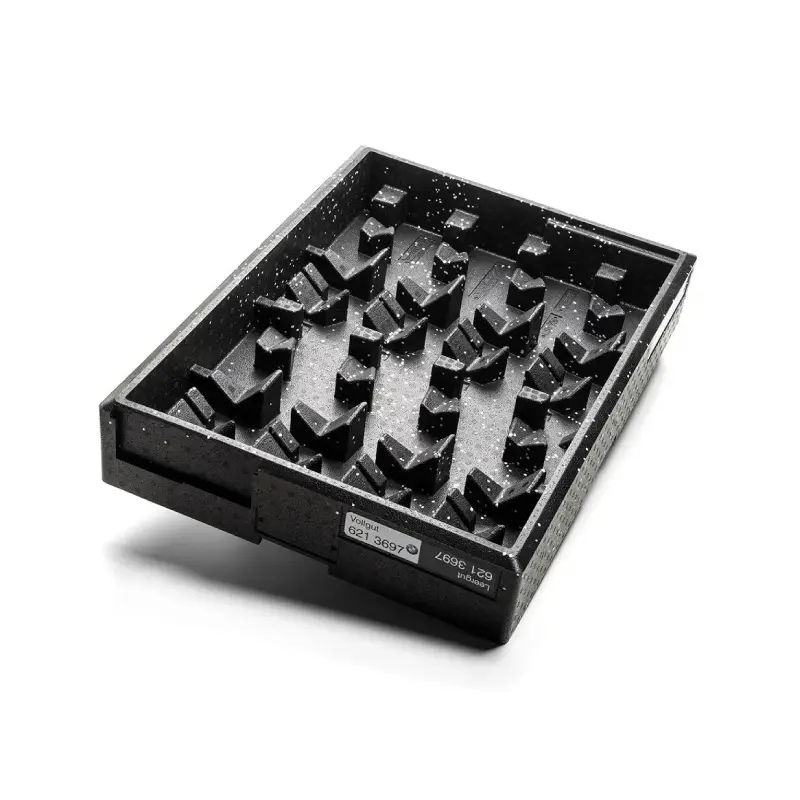
Custom EPP Load Carriers from China
We offer custom EPP load carriers from China, designed for durable, lightweight handling and transport of industrial parts. These carriers provide excellent impact resistance, reusability, and precise fit for components. Ideal for automotive and logistics applications, they improve efficiency, protect products, and support cost-effective, repeatable material handling systems.
Get EPP Load Carriers Wholesale
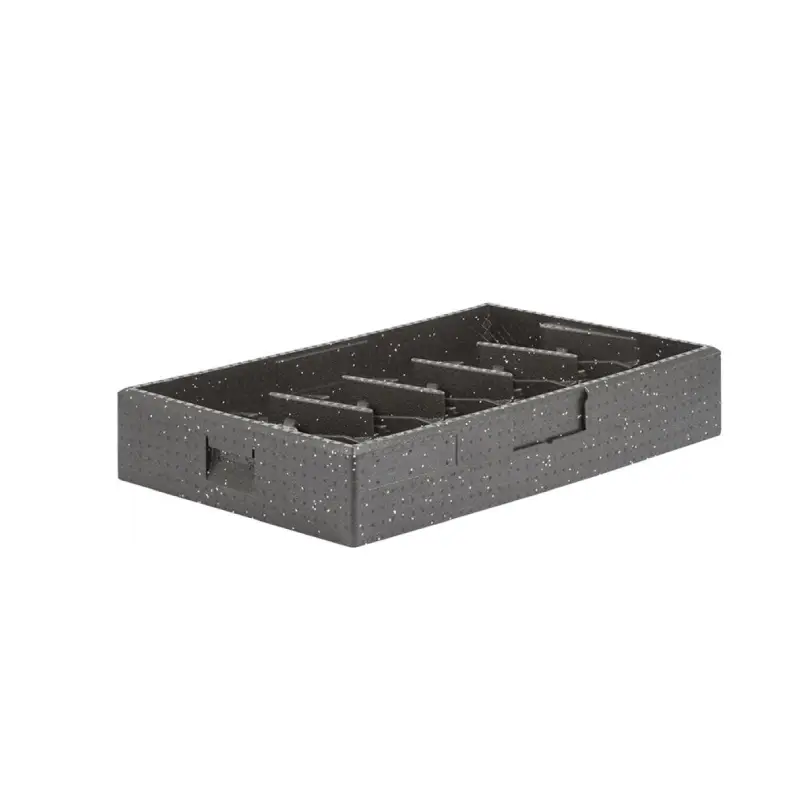
Lightweight Construction – EPP load carriers reduce overall handling weight, making manual and automated transport easier. This lowers labor strain, improves workflow efficiency, and reduces shipping costs without sacrificing structural strength.
Excellent Impact Resistance – The resilient foam structure absorbs shocks and vibrations during transport. EPP carriers protect sensitive components from damage, helping reduce product loss and maintain consistent quality throughout logistics processes.
Reusable and Durable – EPP load carriers withstand repeated use without deformation. Their long service life supports returnable packaging systems, reduces replacement frequency, and helps control long-term operational costs.
Custom Fit Design – EPP can be molded to precise shapes and sizes. Custom load carriers securely hold parts in place, improve stacking stability, and prevent movement during transport and storage.
Thermal and Chemical Stability – EPP maintains performance across wide temperature ranges and resists many chemicals. This makes load carriers suitable for diverse industrial environments and demanding logistics conditions.
Customize Your Desired EPP Load Carriers
Shape and Internal Structure Design
We customize the carrier shape and internal cavities to match your product geometry precisely. This ensures secure positioning, prevents movement during transport, improves stacking stability, and reduces the risk of impact damage throughout handling and logistics operations.
Density and Material Selection
We adjust EPP density based on load weight, protection needs, and reuse frequency. Proper density selection balances cushioning and strength, extends service life, and ensures the load carrier performs reliably under repeated handling and varying environmental conditions.
Size and Load Capacity
We tailor external dimensions and load capacity to fit your logistics system. This includes compatibility with pallets, racks, and automated lines, helping optimize storage efficiency, improve transport utilization, and support smoother warehouse and production workflows.
Functional Features and Branding
We integrate functional details such as handles, separators, labels, and color coding. These features improve handling convenience, part identification, and process organization, while branding options support clear ownership recognition and streamlined supply chain management.
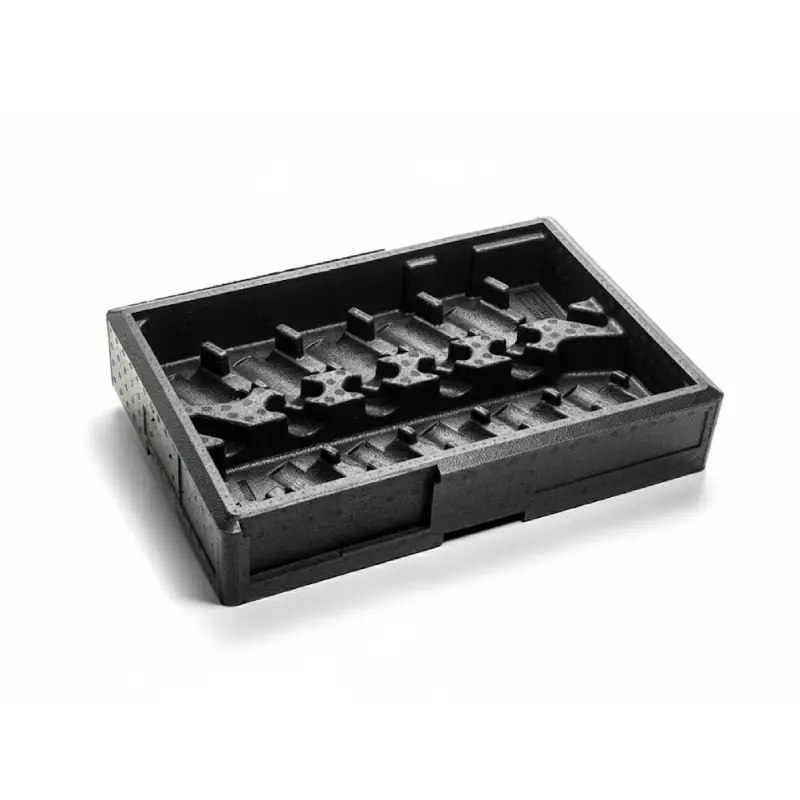
EPP black foam load carrier
We offer EPP black foam load carriers designed for durable, reusable industrial handling and transport. The black EPP foam provides strong impact resistance, stable performance, and a clean professional appearance. Suitable for automotive and logistics applications, these carriers protect components, support repeated use, and improve efficiency across storage and supply chains.

EPP ESD load carrier
We offer EPP ESD load carriers designed to safely handle electrostatic-sensitive components. These carriers combine lightweight strength with antistatic performance, reducing static discharge risks during transport and storage. Durable and reusable, they provide reliable protection for electronics, automotive parts, and precision components in controlled industrial environments.
EPP Load Carriers FAQs
what is load carrier?
A load carrier is a reusable container or support used to hold, protect, and transport products or components through storage, production, and logistics processes.
It keeps items organized, prevents damage, and improves handling efficiency. Load carriers are widely used in manufacturing, warehousing, automotive, and supply chain operations.
what is load carrier made of?
Load carriers are made from different materials selected to match handling, protection, and reuse requirements in industrial and logistics environments.
The material choice affects durability, weight, cost, and performance during transport, storage, and automated handling.
Common load carrier materials are designed to protect products while supporting efficient, repeatable logistics operations.
EPP (Expanded Polypropylene) – EPP load carriers are lightweight, impact resistant, and highly reusable. The foam structure absorbs shocks, recovers shape after impact, and resists moisture and chemicals, making it ideal for returnable packaging, automotive logistics, and long-term industrial use.
EPS (Expanded Polystyrene) – EPS load carriers offer good cushioning and thermal insulation at a lower cost. They are commonly used for single-use or limited reuse applications where lightweight protection is needed, such as packaging inserts and temperature-sensitive product transport.
Plastic (PP or HDPE) – Rigid plastic load carriers provide strong structural support and precise dimensions. They work well with automated systems, resist moisture, and offer long service life, making them suitable for heavy-duty logistics and warehouse operations.
Metal (Steel or Aluminum) – Metal load carriers are used for heavy loads and harsh environments. They provide maximum strength, heat resistance, and durability, but add weight and cost, making them suitable for specialized industrial or long-term storage applications.
Composite and Hybrid Materials – Some load carriers combine foam, plastic, and metal components. These hybrid designs balance cushioning, strength, and cost, offering tailored performance for specific logistics needs and complex supply chain systems.
where to use EPP load carriers?
EPP load carriers are used wherever lightweight strength, impact protection, and reusability are required in logistics and production. Their resilient foam structure supports repeated handling while protecting parts from damage. Because of these advantages, EPP load carriers are widely applied across manufacturing, warehousing, and supply chain operations.
Automotive Manufacturing and Assembly – EPP load carriers are commonly used to transport automotive components between production stages. They protect parts from vibration and impact, support automated handling systems, and withstand repeated use in closed-loop automotive logistics environments.
Electronics and Precision Components – In electronics manufacturing, EPP load carriers safely hold delicate parts. Their cushioning and optional ESD properties reduce damage risks, maintain component positioning, and support clean, organized transport within controlled production and storage areas.
Industrial Production Lines – EPP load carriers help move semi-finished and finished products through machining, assembly, and inspection processes. Their lightweight design improves worker ergonomics, while consistent dimensions ensure compatibility with conveyors, robots, and automated equipment.
Warehousing and Storage Systems – In warehouses, EPP load carriers support efficient stacking and space utilization. They protect stored items from compression and impact, maintain organization, and contribute to faster picking, handling, and inventory management.
Returnable Packaging and Logistics – EPP load carriers are ideal for returnable transport packaging. Their durability supports multiple shipping cycles, reduces packaging waste, and lowers long-term logistics costs while maintaining reliable protection throughout the supply chain.
how to manufacture EPP load carriers?
EPP load carriers are manufactured through a controlled foam molding process that combines material preparation, precise tooling, and stable production conditions. The goal is to create lightweight, durable carriers with accurate dimensions and consistent density. Each manufacturing step directly affects strength, cushioning performance, and long-term reusability in industrial logistics applications.
EPP Bead Pre-Expansion – Raw polypropylene beads are pre-expanded using steam to achieve the required density. This step controls weight, strength, and cushioning properties, ensuring the beads are properly conditioned before molding for consistent load carrier performance.
Aging and Stabilization – After pre-expansion, EPP beads are aged in silos to stabilize internal pressure and moisture. Proper aging improves bead fusion during molding, reduces shrinkage, and helps achieve uniform density throughout the load carrier.
Mold Design and Preparation – Custom molds are designed based on load carrier shape, size, and functional requirements. Mold quality directly affects dimensional accuracy, surface finish, and structural strength, ensuring the carrier fits production and logistics systems precisely.
Steam Chest Molding Process – A steam chest molding machine heats the beads inside the mold, causing them to fuse together. Controlled temperature and pressure ensure strong bonding, consistent density, and reliable impact resistance in the finished EPP load carrier.
Cooling, Demolding, and Finishing – After molding, the carrier is cooled to stabilize its shape. It is then demolded, inspected, and finished if needed, ensuring the final product meets quality standards for repeated industrial use.