
Explore the distinctions between EPS and XPS insulation as we delve into the key differences between these two popular insulation materials. Discover the benefits of EPS versus XPS to make an informed decision for your insulation needs.
Uncover the unique features of EPS and XPS insulation and gain insights into which option might be the ideal choice for your specific requirements. Stay informed about the essential factors that set EPS apart from XPS and vice versa, ensuring you select the most suitable insulation solution for your project.
What Is EPS?
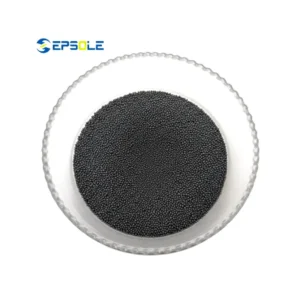
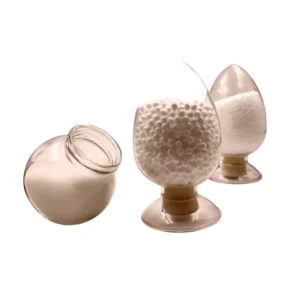
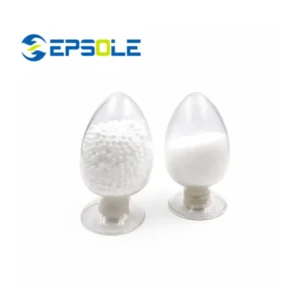
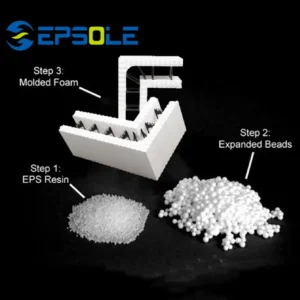
EPS, or expanded polystyrene insulation, is crafted by subjecting foam beads to heat or steam within a mold. This process prompts the beads to expand and amalgamate.
A single cubic meter of EPS encompasses around 10 million EPS foam beads, each boasting roughly 3,000 closed-off cells filled with air.
Essentially, EPS consists of 2% polystyrene and a whopping 98% air. While the manufacturing process yields a closed-cell structure, it doesn’t produce a fully closed-cell insulation board, primarily due to potential voids that may form between the beads.
What Is Polystyrene?
Polystyrene is a synthetic polymer made from the monomer styrene. It is a versatile and widely used plastic material known for its lightweight and insulating properties. Polystyrene can be produced in various forms, including solid and foam.
What Is XPS?
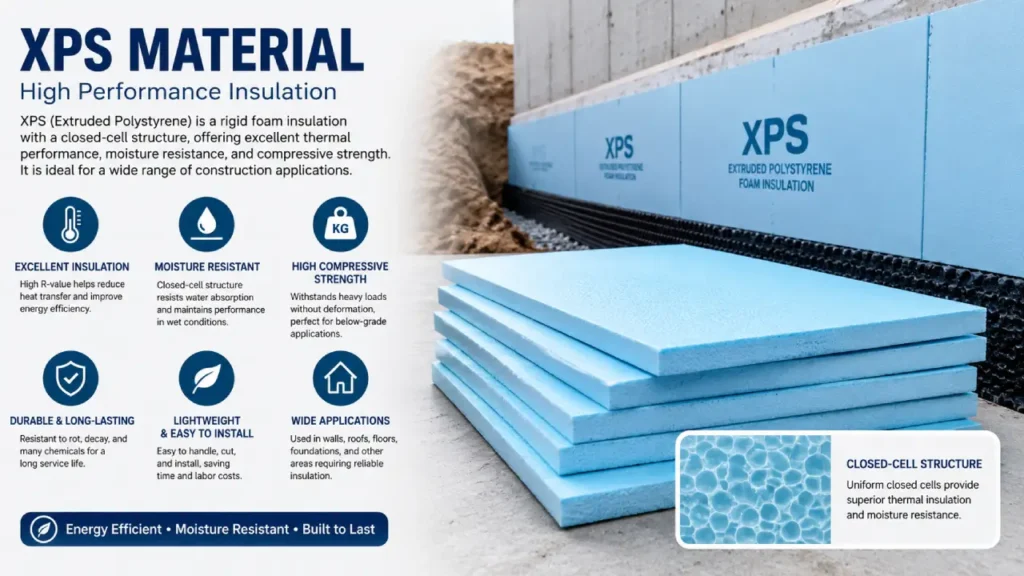
XPS, or extruded polystyrene, is a rigid foam insulation material made by extruding polystyrene resin into a closed-cell structure. Its dense, uniform structure provides excellent thermal insulation, moisture resistance, and compressive strength.
XPS is widely used in walls, roofs, floors, foundations, and other construction applications where durable and reliable insulation is needed.
- Wide Range of Applications: XPS is commonly used in walls, roofs, floors, foundations, cold storage facilities, and infrastructure projects. Its combination of thermal resistance, moisture resistance, and mechanical strength allows it to meet the requirements of various demanding insulation applications.
- Closed-Cell Structure: XPS contains tightly connected closed cells that limit water absorption and help maintain consistent insulation performance. This structure also gives the material a smooth, dense surface and makes it suitable for areas exposed to moisture, such as foundations and below-grade construction.
- Excellent Thermal Insulation: XPS provides strong thermal resistance, helping reduce heat transfer through building envelopes. Its insulation performance can improve indoor temperature stability and reduce heating or cooling requirements, making it a practical choice for energy-efficient residential, commercial, and industrial buildings.
- High Compressive Strength: XPS has a rigid structure that can withstand significant compressive loads without easily deforming. This makes it particularly useful beneath concrete slabs, floors, foundations, and other applications where insulation must support heavy loads while maintaining its protective properties.
- Moisture Resistance: XPS absorbs relatively little water because of its closed-cell structure. This resistance helps protect its thermal performance in damp environments and makes XPS suitable for below-grade walls, foundation insulation, inverted roofs, and other construction areas where moisture exposure is a concern.
- Durable Construction Material: XPS maintains its rigid form and insulation properties under many demanding conditions. When properly installed and protected, it can provide long-lasting thermal insulation for building structures, helping improve energy efficiency and reduce the need for frequent insulation replacement.
Thermal Conductivity of EPS and XPS
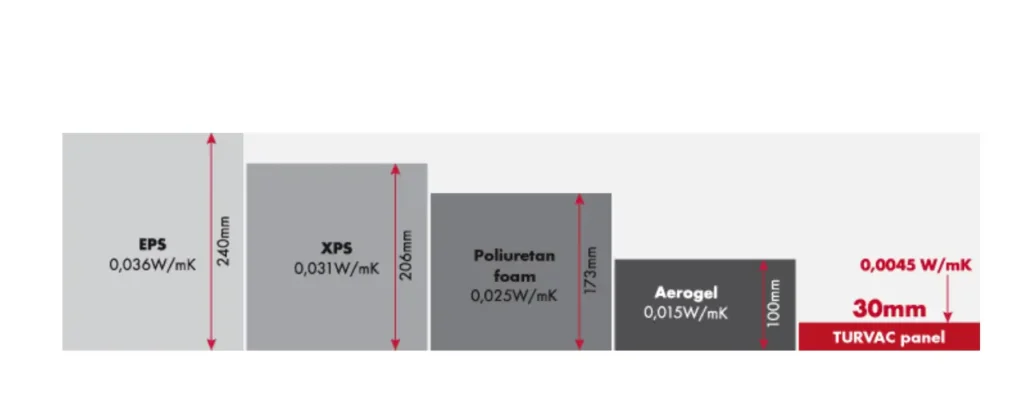
EPS (expanded polystyrene) and XPS (extruded polystyrene) are widely used insulation materials with low thermal conductivity, making them effective for reducing heat transfer. Their unique foam structures trap air, improving energy efficiency in buildings and refrigerated storage.
Understanding their thermal performance helps select the right material for specific insulation applications.
- Applications Based on Thermal Properties – EPS is commonly used for wall insulation, roof panels, and packaging, while XPS is ideal for foundations, floors, basements, and cold storage applications. Both materials are chosen based on thermal requirements, load-bearing needs, and environmental conditions.
- EPS Thermal Conductivity – EPS typically has a thermal conductivity of 0.032–0.038 W/m·K. Its open-cell structure allows some air movement, which slightly reduces insulation efficiency. Despite this, EPS provides cost-effective, lightweight, and reliable thermal resistance for walls, roofs, floors, and packaging insulation.
- XPS Thermal Conductivity – XPS has a thermal conductivity of 0.028–0.034 W/m·K, lower than EPS due to its closed-cell structure. This structure minimizes air movement and moisture absorption, resulting in more consistent and long-term insulation performance, especially in high-moisture or heavy-duty applications.
- Comparison of Performance – While both materials provide thermal insulation, XPS generally performs better in environments exposed to moisture or compression. EPS offers affordability and versatility, making it suitable for general construction and packaging, whereas XPS is preferred for high-performance, moisture-resistant insulation needs.
- Energy Efficiency Benefits – Using EPS or XPS insulation reduces heat loss or gain in buildings, cutting energy consumption for heating and cooling. Proper material selection helps maintain indoor comfort, lowers utility costs, and contributes to environmentally sustainable construction practices by reducing overall energy demand.
Compressive Strength of EPS and XPS
EPS (expanded polystyrene) and XPS (extruded polystyrene) are widely used insulation materials, and their compressive strength determines how well they resist deformation under load. Understanding these properties helps in selecting the right material for construction, packaging, or industrial applications where structural support and durability are critical.
Packaging Applications – Compressive strength also matters in protective packaging. EPS cushions products effectively for shipping, while XPS may be chosen for heavier or more fragile items that need extra resistance to pressure, ensuring items remain undamaged during transit.
EPS Compressive Strength – EPS typically has a compressive strength ranging from 70 to 200 kPa, depending on density. It is lightweight and resilient but can deform under heavy loads. EPS is suitable for applications like wall insulation, packaging, and roof panels where moderate compressive resistance is sufficient.
XPS Compressive Strength – XPS generally has higher compressive strength, ranging from 200 to 700 kPa, due to its dense, closed-cell structure. It maintains shape under heavier loads, making it ideal for flooring, foundations, driveways, and other areas requiring long-term structural support.
Comparison of EPS and XPS – While EPS is cost-effective and versatile, XPS provides superior load-bearing capacity. Choosing between them depends on the expected stress and compression in the application. XPS is preferred for high-stress, moisture-prone environments, whereas EPS is suitable for lighter structural or packaging uses.
Construction Applications – In buildings, compressive strength determines where each material can be used. EPS works well for wall insulation and roof panels, while XPS is better for subfloor insulation, under concrete slabs, and areas where heavy loads could compromise EPS performance.
Applications of EPS and XPS
Expanded Polystyrene (EPS) and Extruded Polystyrene (XPS) are widely used insulation materials with various applications in construction and other industries. Here are some common applications for EPS and XPS:
EPS (Expanded Polystyrene) Applications:
- Building Insulation: EPS is commonly used as insulation in walls, roofs, and floors of residential and commercial buildings.
- Geofoam: Used in civil engineering applications, EPS can be employed as lightweight fill material for highway embankments, bridge abutments, and other construction projects.
- Packaging Material: EPS is widely used for packaging fragile items due to its lightweight and shock-absorbing properties.
- Floatation Devices: The buoyant nature of EPS makes it suitable for crafting flotation devices, such as life jackets and buoys.
- Craft and Art Projects: Due to its ease of shaping and lightweight characteristics, EPS is often used in crafting and art projects.
XPS (Extruded Polystyrene) Applications:
- Underground Insulation: XPS is used for insulating foundations, basement walls, and under-slab applications to prevent heat loss.
- Roofing Insulation: XPS is employed in flat roofing systems to provide insulation and resist moisture penetration.
- Cold Storage: XPS is used in the construction of refrigerated storage facilities and cold rooms due to its resistance to moisture and temperature stability.
- Road and Rail Construction: XPS can be used in transportation infrastructure projects to provide insulation and stability.
- Facade Systems: XPS is utilized in external insulation systems for building facades, contributing to energy efficiency.
- Hydronic Heating Systems: XPS is often used in hydronic heating applications, providing insulation under the flooring to improve energy efficiency.
Both EPS and XPS offer excellent thermal insulation properties. Still, their different manufacturing processes and material characteristics make them suitable for various applications based on factors such as compressive strength, moisture resistance, and cost considerations.
Sustainability of EPS and XPS
The sustainability of EPS (Expanded Polystyrene) and XPS (Extruded Polystyrene) involves considerations related to their environmental impact, recyclability, energy consumption in manufacturing, and long-term performance. Here’s an overview of sustainability aspects for both materials:
EPS (Expanded Polystyrene):
- Recyclability: EPS is recyclable, but the effectiveness of recycling programs can vary regionally. In some places, EPS foam is accepted for recycling, while in others, it might be more challenging to find recycling facilities.
- Resource Use: EPS is derived from petroleum-based raw materials. The extraction and processing of these non-renewable resources contribute to the environmental footprint of EPS.
- Energy Consumption: The manufacturing process of EPS typically requires less energy compared to XPS. It involves expanding polystyrene beads with steam, creating a lightweight and insulating material.
- Biodegradability: EPS is not easily biodegradable and can persist in the environment for a long time if not properly managed. This characteristic raises concerns about its impact on ecosystems and wildlife.
XPS (Extruded Polystyrene):
- Recyclability: XPS is more challenging to recycle than EPS due to its closed-cell structure and the blowing agents used in its production. Recycling options for XPS are limited, and the material is often disposed of in landfills.
- Resource Use: Similar to EPS, XPS is derived from petroleum-based materials, contributing to the depletion of non-renewable resources.
- Energy Consumption: The manufacturing process of XPS involves extrusion and requires more energy compared to EPS production. The extrusion process involves melting and shaping the polystyrene material, making it more energy-intensive.
- Longevity: Both EPS and XPS are durable materials with a long lifespan, contributing to the longevity of structures in which they are used. This durability can be considered a positive aspect from a sustainability perspective.
While both EPS and XPS offer effective thermal insulation properties, their sustainability profiles differ. EPS tends to have a somewhat better recycling profile and lower energy consumption during manufacturing.
However, concerns about the persistence of EPS in the environment and its reliance on petroleum-based resources persist. XPS, on the other hand, faces challenges in recycling and has a higher energy-intensive manufacturing process.
Consideration of local recycling capabilities, energy sources, and disposal practices should be taken into account when evaluating the sustainability of these materials in specific applcations.
What Is EPS Insulation?
EPS insulation stands for Expanded Polystyrene insulation. It is a type of rigid foam insulation material that is widely used in construction for its excellent thermal insulation properties.
EPS insulation is derived from the polymerization of styrene, a synthetic hydrocarbon, and is manufactured through a process of expanding polystyrene beads with steam.
EPS Insulation Benefits
EPS insulation offers a practical and cost-effective solution for improving building energy efficiency. Made from expanded polystyrene, this lightweight foam material provides reliable thermal insulation, moisture resistance, and durability. Its easy installation and versatile design make EPS suitable for walls, roofs, floors, foundations, and many other residential, commercial, and industrial construction applications.
- Durable and Long-Lasting: EPS can maintain its insulation properties for many years when correctly installed and protected from environmental exposure. It resists decay and does not provide a food source for mold. Its durability makes it suitable for both new construction and renovation projects.
- Excellent Thermal Insulation: EPS helps reduce heat transfer between indoor and outdoor environments. Its cellular structure provides effective thermal resistance, helping maintain more stable indoor temperatures and reducing heating and cooling demands. This makes EPS a practical choice for improving overall building energy efficiency.
- Lightweight and Easy to Handle: EPS insulation is lightweight compared with many traditional insulation materials. Workers can easily transport, cut, and install EPS boards on construction sites. Its low weight can simplify handling and installation while potentially reducing labor requirements and project costs.
- Cost-Effective Insulation: EPS generally provides good insulation performance at a competitive price. Its affordable material cost, lightweight construction, and straightforward installation make it attractive for projects with strict budgets. Builders can use EPS to achieve practical thermal performance without significantly increasing overall construction expenses.
- Moisture Resistance: EPS has a cellular structure that limits water absorption when properly manufactured and installed. This characteristic helps maintain insulation performance in many building applications. With suitable protective layers and correct installation, EPS can be used effectively in walls, roofs, floors, and foundations.
What Is XPS Insulation?
XPS insulation stands for Extruded Polystyrene insulation. It is a type of rigid foam insulation material widely used in construction for its excellent thermal insulation properties.
XPS insulation is manufactured through an extrusion process that involves melting polystyrene pellets and forming them into a continuous, closed-cell structure.
XPS Insulation Benefits
XPS insulation provides reliable thermal performance for buildings that require strong, durable, and moisture-resistant insulation. Made from extruded polystyrene, XPS features a closed-cell structure that helps limit water absorption while providing good compressive strength. These properties make XPS suitable for demanding applications, including roofs, floors, foundations, walls, and below-grade construction projects.
- Excellent Thermal Performance: XPS provides effective thermal resistance that helps reduce heat transfer through building envelopes. By limiting heat loss during colder conditions and heat gain during warmer periods, XPS can help maintain comfortable indoor temperatures and improve the overall energy efficiency of buildings.
- High Moisture Resistance: The closed-cell structure of XPS limits water absorption and helps maintain insulation performance in damp environments. This makes XPS particularly useful for foundations, below-grade walls, floors, and other areas where insulation may experience regular contact with moisture.
- High Compressive Strength: XPS has a rigid structure that can withstand substantial loads without easily deforming. This strength makes it suitable for applications beneath concrete slabs, floors, foundations, and other areas where insulation must support heavy loads while maintaining its structural integrity.
- Durable and Long-Lasting: XPS can provide stable insulation performance for many years when properly installed and protected. Its rigid structure helps it withstand demanding construction conditions, making it a practical choice for projects that require dependable insulation and long-term thermal performance.
- Reduced Thermal Bridging: XPS boards can provide continuous insulation across various building surfaces, helping reduce areas where heat can bypass conventional insulation. Properly installed continuous XPS insulation can improve the building envelope and contribute to more consistent indoor temperatures and energy performance.
EPS vs XPS Compare
Here’s a table showing you the key differences between Expanded Polystyrene (EPS) and Extruded Polystyrene (XPS) across various characteristics:
| Characteristic | EPS (Expanded Polystyrene) | XPS (Extruded Polystyrene) |
|---|---|---|
| R-value (Thermal Resistance) | Typically ranges from 3.75 to 4.7 (GPS) per inch of thickness | Typically ranges from 4.5 to 5 per inch of thickness |
| Long-term Thermal Resistance (LTTR) | LTTR values may vary depending on manufacturer and conditions | Generally, LTTR values are stable and predictable |
| Environmental Impact | Recyclable, but recycling availability varies by region | More challenging to recycle; often disposed of in landfills |
| Water Absorption | Can absorb water, but tends to dry out over time | Resistant to water absorption, making it more stable |
| Compressive Resistance | Lower compressive strength compared to XPS | Higher compressive strength, suitable for heavy loads |
| Dimensions Available | Available in various sizes and thicknesses | Commonly available in standard sheets and thicknesses |
| Manufacturing Process | Expanded through beads and steam, lower energy consumption | Extruded and expanded with blowing agents, higher energy consumption |
| Density | Generally lower density | Higher density, contributing to increased strength |
| Cost | Often lower cost due to manufacturing process | Generally higher cost due to production complexity |
| Biodegradability | Not easily biodegradable, can persist in the environment | Not easily biodegradable, can persist in the environment |
| Common Applications | Packaging, insulation, Geofoam, craft projects | Insulation for foundations, roofs, cold storage, facades |
| Overall Performance | Effective insulation with lower compressive strength | Effective insulation with higher compressive strength |
It’s important to note that specific product characteristics may vary between manufacturers, and regional availability of recycling facilities can impact the environmental sustainability of both EPS and XPS. When choosing between EPS and XPS, it’s advisable to consider the specific requirements of the application and the environmental considerations relevant to the location.
EPS Vs XPS Insulation
EPS and XPS are two widely used rigid foam insulation materials made from polystyrene, but they differ in structure, performance, cost, and applications. EPS is manufactured by expanding polystyrene beads, while XPS is produced through an extrusion process.
Understanding these differences helps builders choose the right insulation material based on thermal performance, moisture exposure, strength, budget, and project requirements.
1. Manufacturing Process
EPS is produced by expanding small polystyrene beads and molding them into insulation boards. This process creates a structure made up of many individual foam beads. XPS is manufactured by extruding polystyrene resin into a continuous foam board, creating a more uniform closed-cell structure with a smooth surface.
2. Thermal Insulation Performance
Both EPS and XPS provide effective thermal insulation and can help reduce heat transfer through building envelopes. XPS generally offers higher and more consistent thermal resistance per unit thickness, while EPS provides good insulation at a lower cost. The appropriate choice depends on the required thermal performance and available installation space.
3. Moisture Resistance
XPS generally provides better resistance to moisture because its continuous closed-cell structure limits water absorption. EPS can also perform well when properly designed and protected, but its bead-based structure may allow greater moisture movement. For foundations, below-grade walls, and other damp environments, XPS is often selected when moisture resistance is a major consideration.
4. Compressive Strength
XPS typically offers higher compressive strength than standard EPS products, making it suitable for applications exposed to heavier loads. It is commonly used beneath concrete slabs, floors, foundations, and other load-bearing areas. EPS is also available in different density grades, allowing higher-strength products to be selected for demanding applications.
5. Cost
EPS is generally more economical than XPS, making it an attractive option for projects where insulation performance and budget both matter. XPS usually costs more because of its manufacturing process and enhanced moisture resistance and mechanical properties. For large construction projects, the cost difference can become an important factor in material selection.
6. Durability
Both materials can provide long-term insulation performance when correctly specified, installed, and protected. XPS has a dense structure that provides strong resistance to moisture and mechanical loads. EPS can also be durable in suitable applications, particularly when protected from excessive moisture, physical damage, and prolonged environmental exposure.
7. Applications
EPS is widely used in exterior walls, insulated panels, roofs, floors, packaging, and general building insulation. XPS is particularly suitable for foundations, below-grade walls, floors, roofs, parking decks, and other applications requiring greater moisture resistance and compressive strength. The best option depends on the conditions of the specific project.
| Aspect | EPS Insulation | XPS Insulation |
|---|---|---|
| Material | Expanded polystyrene | Extruded polystyrene |
| Structure | Expanded bead structure | Continuous closed-cell structure |
| Thermal Performance | Good | Generally higher |
| Moisture Resistance | Good when properly protected | Excellent |
| Compressive Strength | Available in different grades | Generally higher |
| Cost | More economical | Usually more expensive |
| Durability | Good with proper installation | Excellent in demanding applications |
| Common Applications | Walls, roofs, panels, floors | Foundations, floors, roofs, below-grade areas |
| Best Advantage | Cost-effectiveness and versatility | Moisture resistance and strength |
How to Choose EPS and XPS?
Choosing between EPS and XPS insulation depends on your building requirements, environmental conditions, budget, and desired thermal performance. Although both materials are made from expanded or extruded polystyrene, their structures and properties differ.
Considering the following factors can help you select the most suitable insulation material for walls, roofs, floors, foundations, and other applications.
Installation and Handling: EPS is lightweight and relatively easy to cut, transport, and install. XPS is also lightweight but typically has a denser, more rigid structure. Consider the installation method, available tools, labor requirements, and whether the insulation needs to fit around irregular surfaces or specific building components.
Thermal Insulation Performance: Compare the R-value and thermal conductivity of EPS and XPS. XPS generally provides higher and more consistent thermal resistance, while EPS can still deliver effective insulation at a more economical cost. Consider the required insulation thickness and the energy-efficiency targets of your specific building project.
Moisture Resistance: Moisture exposure is important when selecting insulation for foundations, basements, roofs, and other damp environments. XPS has a relatively closed-cell structure that offers strong resistance to water absorption. EPS can also perform well when properly designed and protected, but application conditions should be carefully evaluated.
Compressive Strength: Consider the amount of weight or pressure the insulation will need to withstand. XPS generally offers higher compressive strength, making it suitable for applications beneath concrete slabs, foundations, and areas exposed to heavy loads. EPS is available in different grades and can also meet various structural requirements.
Cost and Budget: Project cost is another important consideration. EPS is typically more affordable than XPS, making it attractive for large-scale insulation projects where controlling material costs matters. XPS may have a higher initial price but can provide enhanced moisture resistance and durability for demanding applications.
Application Requirements: The intended application should guide your decision. EPS is commonly used for exterior walls, roofs, packaging, and insulation panels, while XPS is often selected for foundations, below-grade insulation, floors, and areas exposed to moisture or heavy loads. Always match the material to project conditions.
Durability and Service Life: Evaluate how well the insulation will maintain its performance over time. Both EPS and XPS can provide long-term insulation when correctly installed and protected. However, exposure to moisture, mechanical loads, temperature changes, chemicals, and other environmental conditions can affect their performance differently.
Environmental Considerations: Consider recycled content, manufacturing processes, energy efficiency, and end-of-life options when comparing EPS and XPS. Both materials can contribute to building energy savings by reducing heat transfer. The better environmental choice depends on the complete product life cycle and the requirements of your project.
Conclusion
EPS and XPS insulation both offer effective thermal protection, but they differ in moisture resistance, compressive strength, thermal performance, cost, and suitable applications. EPS is often a cost-effective choice for general insulation needs, while XPS can be better suited for demanding environments requiring greater moisture resistance and strength.
The right insulation material ultimately depends on your project requirements, installation conditions, budget, and expected performance. By carefully comparing these factors, you can choose EPS or XPS insulation that provides reliable energy efficiency, durability, and long-term value for your building project.
Looking for qualified EPS and XPS materials for your project? We provide reliable insulation solutions with different specifications and performance options to meet various applications. Contact us today to discuss your requirements and get the right EPS or XPS material for your project.