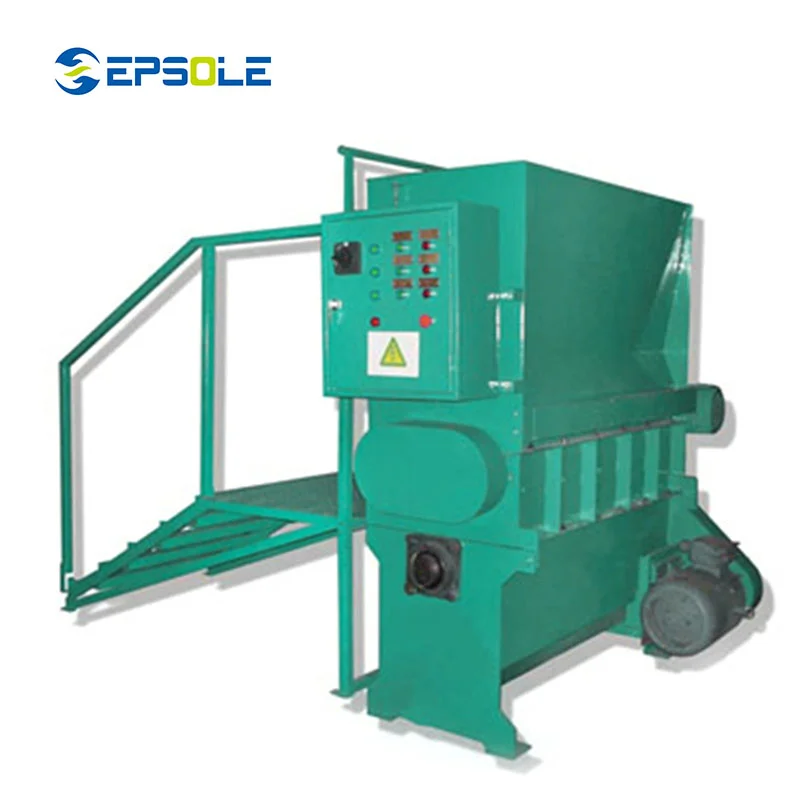
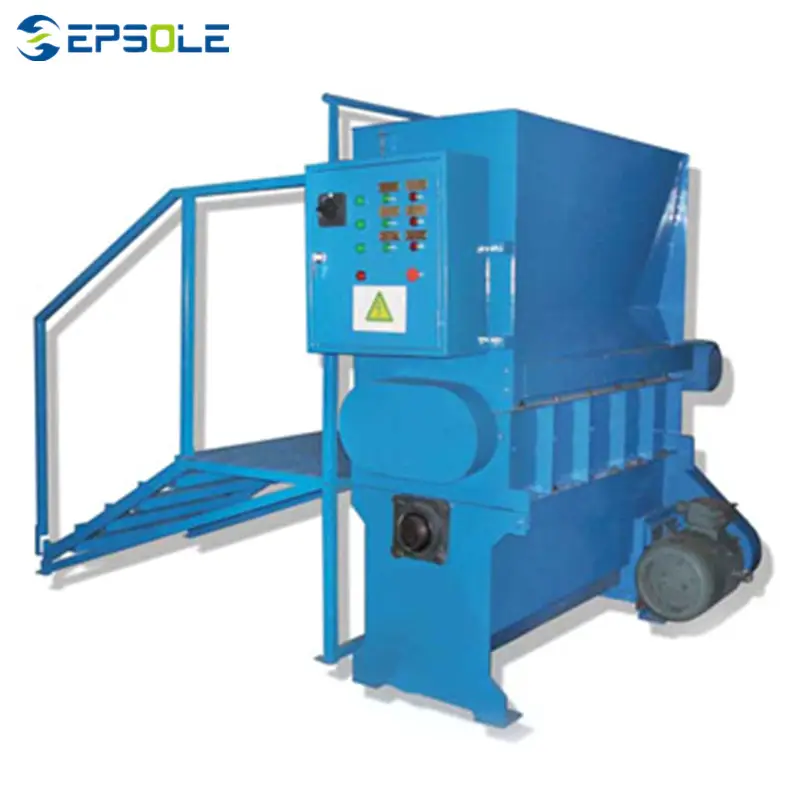
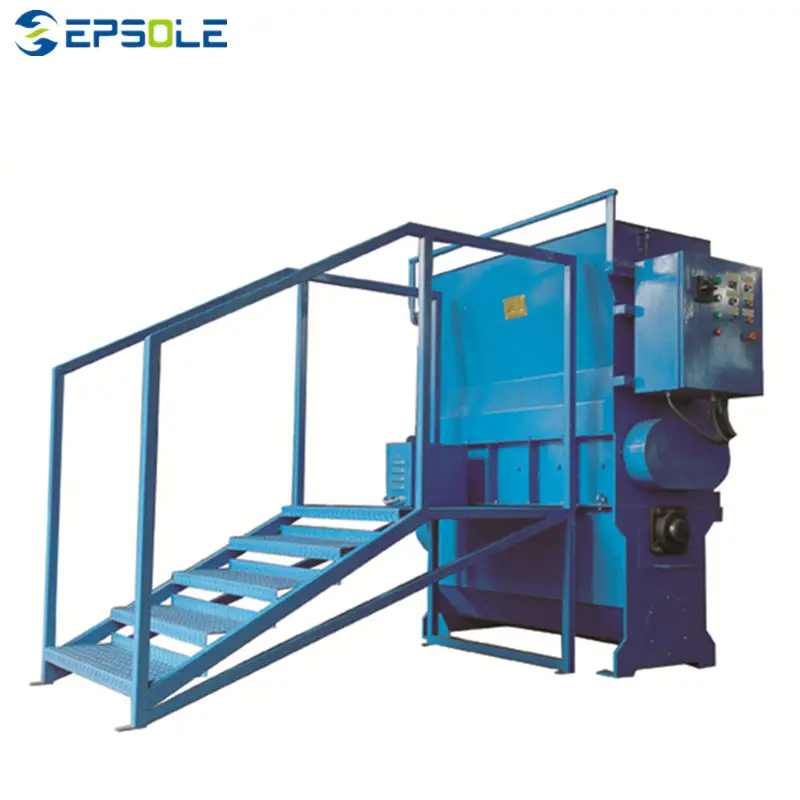
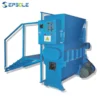
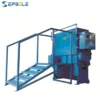
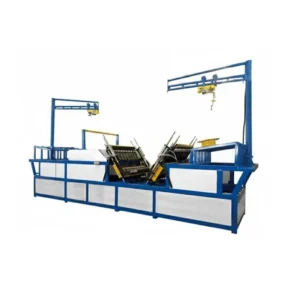
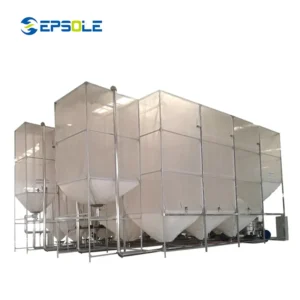
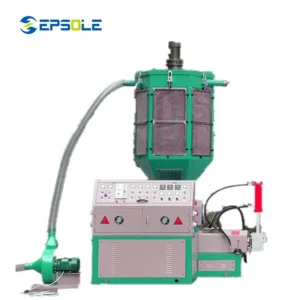
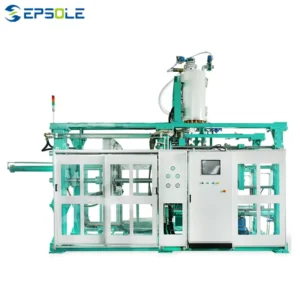
An EPS crusher is a crucial component in the EPS recycling process. It’s designed to break down expanded polystyrene (EPS) waste into smaller, manageable pieces. This reduction in size makes the material suitable for subsequent processing steps, such as washing, drying, and melting.
How Does EPS Crusher Work
An EPS crusher is a machine designed to break down expanded polystyrene (EPS) waste into smaller, manageable pieces. This process is the first crucial step in EPS recycling.
Feeding: EPS waste, such as packaging materials, insulation, or other EPS products, is fed into the crusher’s hopper.
Crushing Mechanism: The heart of the crusher is its cutting or tearing mechanism. This can vary depending on the machine type.
- Shredders: Use high-speed blades to cut the EPS into smaller pieces.
- Granulators: Employ a grinding mechanism to produce smaller particles.
- Compactors: Reduce the volume of EPS before further processing. \
Particle Reduction: The cutting or tearing action breaks down the EPS into smaller pieces, typically ranging from a few millimeters to several centimeters in size.
The crushed EPS is discharged from the machine, ready for the next stage of the recycling process, such as washing, drying, and melting.
- Efficiency: Modern EPS crushers are designed for high efficiency, processing large volumes of EPS waste in a short amount of time.
- Particle Size: The desired particle size depends on the subsequent recycling process. For example, smaller particles might be needed for pelletization.
- Noise Reduction: Many EPS crushers incorporate noise reduction features to minimize environmental impact.
By effectively reducing the size of EPS waste, the crusher plays a vital role in making it possible to recycle this material and create new products.
Benefits of Using an EPS Crusher
An EPS crusher offers significant advantages in recycling and waste management, particularly for businesses that deal with large amounts of expanded polystyrene (EPS) waste. Using this equipment improves efficiency and reduces environmental impact by converting waste into usable material.
- Improved Waste Management: The EPS crusher streamlines the entire waste management process by efficiently breaking down foam waste. This leads to easier handling and disposal, improving overall waste control within operations. It simplifies logistics and reduces labor costs.
- Cost Reduction: By recycling EPS, businesses save on disposal costs and reduce the need to purchase new materials. The EPS crusher helps lower waste removal expenses by processing large quantities of foam quickly.
- Environmental Impact: EPS is not biodegradable, making it challenging to dispose of. By using an EPS crusher, you contribute to sustainability by reducing landfill waste and minimizing environmental pollution. Recycled EPS can be repurposed into new products, leading to a circular economy.
- Space Savings: EPS waste can take up significant space, especially in storage or landfills. Crushers compress this foam, enabling businesses to save valuable storage space, improving operational efficiency. A compacted waste load reduces handling and storage costs.
- Increased Profitability: Crushed EPS can be sold to recycling companies, offering businesses an additional revenue stream. Recycled EPS materials can be reused in manufacturing processes, generating profits from what would otherwise be discarded.
Considerations for Selecting EPS Crushers
Choosing the right EPS crusher is essential for maximizing efficiency and ensuring long-term success in recycling operations. Several factors should be taken into account to select a crusher that meets specific needs and operational requirements.
- Cost and ROI: Consider the upfront cost and potential return on investment. While cheaper models may be tempting, investing in higher-quality, more efficient crushers often provides better value in the long term through lower maintenance costs, improved processing rates, and reduced energy consumption.
- Crusher Capacity: The capacity of the crusher determines how much EPS waste it can process at once. It is crucial to select a machine that aligns with your waste volume to avoid underperformance or excessive downtime, ensuring smooth operation throughout the day.
- Energy Efficiency: Energy consumption is a key cost factor. Choose an EPS crusher that offers energy-efficient performance, reducing overall operational costs. A crusher with low energy usage also minimizes environmental impact, contributing to sustainability and reducing your facility’s carbon footprint.
- Material Size Reduction: EPS crushers vary in the size of the foam particles they can produce. It’s important to select a model that can achieve the desired level of material size reduction for your specific recycling goals. Smaller particles are easier to transport and recycle into new products.
- Durability and Maintenance: Consider the durability of the crusher’s components. A machine made with high-quality materials will withstand the rigors of continuous use and require less frequent maintenance. Easy-to-service models can reduce downtime and maintenance costs, keeping operations running smoothly.
- Noise and Vibration Levels: Noise and vibration levels can affect workplace comfort and compliance with local regulations. Choose an EPS crusher designed to minimize these factors. Low noise and vibration help create a safer, more productive environment for workers and reduce the impact on surrounding areas.