
Exterior Insulation and Finish Systems (EIFS) are popular cladding options, but they often spark questions. This guide demystifies EIFS, covering its composition, benefits, and potential drawbacks. We’ll explore everything from installation to maintenance, providing a comprehensive understanding.
Whether you’re a homeowner considering EIFS or a professional seeking detailed information, this resource offers valuable insights. Learn how EIFS contributes to energy efficiency, design flexibility, and building durability.
What Is EIFS?

What Is EIFS in Construction?
EIFS, or Exterior Insulation and Finish Systems, is a type of building cladding that provides exterior walls with an insulated, finished surface. It typically consists of a foam insulation board attached to the exterior wall surface, a reinforced base coat, and a textured finish coat. This layered system offers both thermal insulation and aesthetic appeal.
EIFS is valued for its energy efficiency, design flexibility, and weather resistance. It can be shaped and textured to mimic various traditional claddings, making it a versatile choice for both residential and commercial buildings. However, proper installation is crucial to prevent moisture issues.
EIFS History
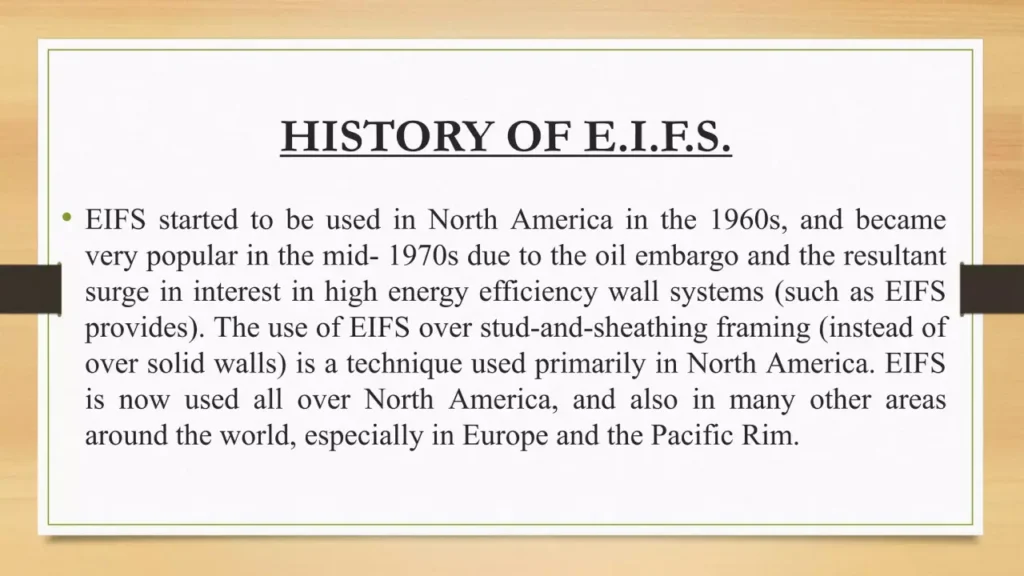
EIFS (Exterior Insulation and Finish System) has evolved over decades as a popular exterior wall cladding system known for insulation performance and design flexibility. Its development reflects advances in construction technology and energy-efficient building practices. Understanding the history of EIFS helps explain why it is widely used in residential and commercial construction today.
- Modern EIFS Development – Today, EIFS systems incorporate advanced materials, improved coatings, and better moisture management. Modern designs emphasize energy efficiency, durability, and architectural flexibility, making EIFS a widely accepted exterior cladding option for contemporary buildings in both commercial and residential sectors.
- Origins in Europe – EIFS first appeared in Europe after World War II, when builders needed cost-effective methods to repair damaged masonry structures. The system provided insulation and decorative finishes in one solution, helping improve building efficiency while reducing material use and construction time across many reconstruction projects.
- Introduction to North America – EIFS was introduced to North America in the late 1960s. Initially used on commercial buildings, it quickly gained attention for its lightweight structure, flexibility in design, and ability to improve energy efficiency, leading to wider adoption across architectural and construction industries.
- Growth in Residential Construction – During the 1980s and 1990s, EIFS began appearing in residential housing due to its attractive finishes and insulation advantages. Builders appreciated its versatility in creating decorative facades while improving thermal performance, which contributed to lower heating and cooling demands.
- Advancements in Drainage Systems – In response to moisture concerns, manufacturers developed EIFS with integrated drainage systems in the 1990s. These improvements allowed water to escape behind the cladding, enhancing durability, protecting wall assemblies, and increasing confidence among builders, architects, and regulatory authorities.
| Decade | Region/Development | Key Features/Events |
| 1940s-1950s | Post-WWII Europe | Initial development focused on basic insulation. |
| 1960s | Europe | Introduction of synthetic materials like EPS. |
| 1970s-1980s | United States | Increased popularity due to energy crisis; aesthetic improvements. |
| 1990s | United States | Concerns arise about moisture issues; development of drainage systems. |
| 2000s-Present | Global | Continued advancements in materials and installation techniques; focus on sustainability. |
What Is EIFS Made of?
EIFS, or Exterior Insulation and Finish Systems, are composed of several key layers that work together to provide insulation and a finished exterior. The core component is typically a foam insulation board, most commonly expanded polystyrene (EPS), which provides the thermal resistance. This board is then covered with a base coat, which is a cementitious material reinforced with fiberglass mesh, providing strength and impact resistance.
On top of the base coat, a finish coat is applied, giving the EIFS its desired texture and color. This finish coat can be made from various materials, including acrylic copolymers, and is designed to be weather-resistant. Additionally, an adhesive is used to attach the insulation board to the substrate, and sometimes, mechanical fasteners are also used for added security.
EIFS Benefits
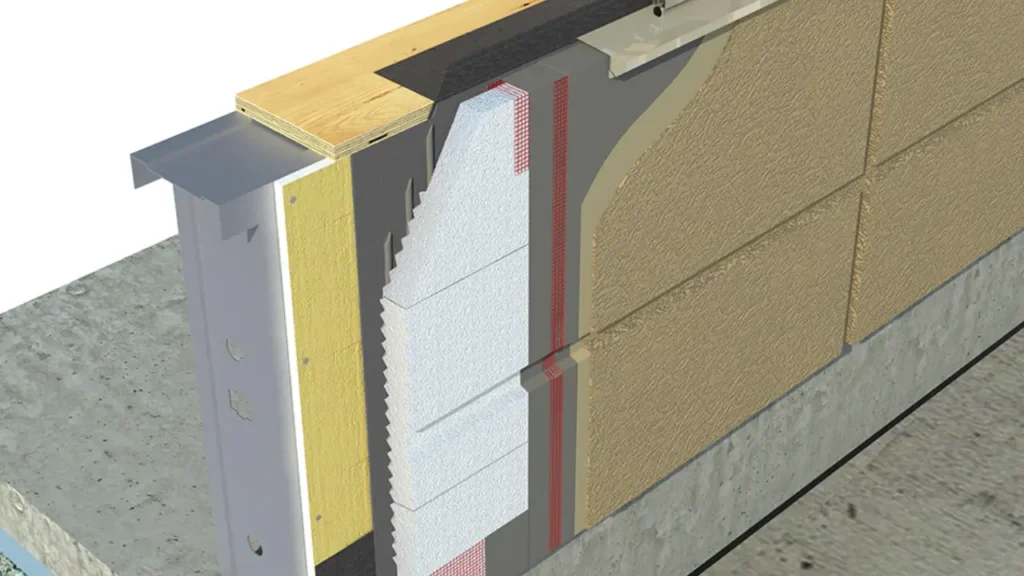
EIFS offers a combination of insulation, design flexibility, and weather protection, making it a popular exterior wall system in modern construction. Its layered structure improves building performance while supporting attractive architectural finishes.
Understanding the benefits of EIFS helps builders and property owners choose effective solutions for energy efficiency and long-term durability.
- Durability and Crack Resistance – EIFS coatings and reinforced base layers provide flexibility that helps resist cracking caused by minor structural movement. The system also protects buildings from weather exposure, contributing to longer exterior lifespan and reduced maintenance requirements over time.
- Improved Energy Efficiency – EIFS includes continuous exterior insulation that reduces thermal bridging through wall studs. This helps maintain stable indoor temperatures and lowers heating and cooling demand. Buildings using EIFS often experience improved energy performance compared with traditional cladding systems that provide limited insulation coverage.
- Lightweight Wall System – Compared with traditional masonry or concrete cladding, EIFS is significantly lighter. The reduced weight places less stress on structural framing and foundations, which can simplify installation and lower construction costs while still delivering a durable exterior finish suitable for many building types.
- Design Flexibility – EIFS allows architects to create a wide range of textures, shapes, and decorative details. The system can mimic stone, stucco, or other finishes while supporting curved surfaces and unique architectural designs, giving designers more freedom to achieve visually appealing building exteriors.
- Moisture Management – Modern EIFS systems often include drainage layers that help channel water away from the wall assembly. This reduces the risk of trapped moisture, protects underlying structures, and improves long-term durability when properly installed and maintained.
What Is EIFS Used for?
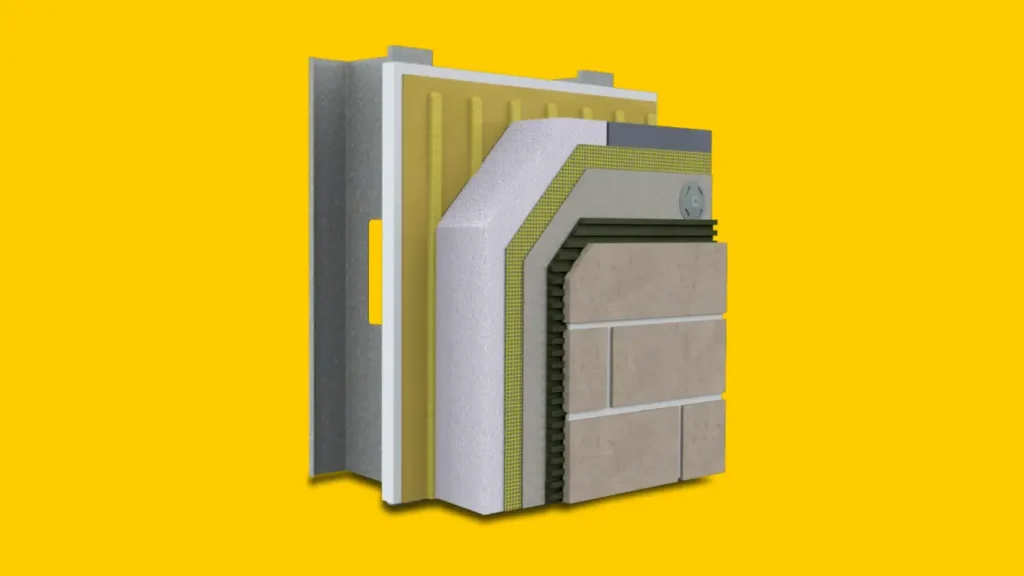
EIFS, or Exterior Insulation and Finish Systems, are primarily used in construction to provide exterior walls with insulation and a finished surface. They serve multiple purposes, contributing to both the building’s performance and aesthetic. Key EIFS applications include:
- Thermal Insulation: EIFS significantly improves a building’s energy efficiency by reducing heat transfer through the walls.
- Weatherproofing: The system acts as a barrier against rain, wind, and other weather elements, protecting the underlying structure.
- Aesthetic Enhancement: EIFS offers a wide range of textures and colors, allowing for diverse architectural designs and the ability to mimic traditional stucco.
Beyond these core functions, EIFS is also utilized for renovations and retrofits, where its lightweight and adaptable nature makes it ideal for updating older buildings. Its ability to be shaped and molded allows for intricate architectural details, making it a versatile choice for both residential and commercial projects.
How to Install EIFS Stucco?

Installing EIFS stucco requires careful preparation and precise application. This guide outlines the essential steps, from surface preparation to final sealing, ensuring a durable and aesthetically pleasing finish for your exterior walls.
Step 1: Preparing the Surface
Begin by ensuring the substrate is clean, dry, and structurally sound. Remove any loose debris, old coatings, or contaminants. Repair any damages to the wall surface, such as cracks or holes, to create a smooth and even base. If necessary, install a weather-resistant barrier over the substrate to further protect against moisture intrusion.
Step 2: Installing the Insulation Board
Apply an adhesive to the back of the insulation board, typically expanded polystyrene (EPS), and press it firmly against the substrate. Ensure the boards are tightly butted together, leaving no gaps. Use mechanical fasteners, such as screws or nails, to secure the boards, especially on taller walls or in areas prone to high winds. Cut the boards as needed to fit around windows, doors, and other openings.
Step 3: Applying the Base Coat and Reinforcing Mesh
Apply a base coat adhesive over the insulation board, embedding a reinforcing mesh into the wet adhesive. The mesh provides additional strength and helps prevent cracking. Overlap the mesh at seams and corners for added reinforcement. Allow the base coat to dry completely according to the manufacturer’s instructions.
Step 4: Applying the Finish Coat
Once the base coat is dry, apply the finish coat, which provides the desired texture and color. This can be done using a trowel, spray gun, or other application methods. Apply the finish coat evenly, working in small sections to maintain a consistent texture. Allow the finish coat to cure completely before exposing it to the elements.
Step 5: Sealing and Finishing Touches
Inspect the finished EIFS for any imperfections or gaps. Apply sealant around windows, doors, and other penetrations to prevent water infiltration. Clean up any excess materials and debris from the job site. Once everything is dry and set, you can enjoy your newly protected and aesthetically pleasing exterior wall.
Conclusion
EIFS, as detailed in this guide, stands out for its adaptability and robust protective qualities, making it a valuable asset for diverse architectural projects. Its ability to enhance energy efficiency while providing a customizable aesthetic is a key advantage in contemporary building design.
The simplicity of EIFS installation, coupled with its long-term durability, positions it as a practical choice for both homeowners and commercial developers. Understanding its benefits empowers informed decisions regarding exterior cladding.
Ready to take your project to the next level with high-quality EIFS? Contact us now to explore our wholesale options and discover how we can meet your specific building needs.