
ETPU, or Expanded Thermoplastic Polyurethane, is a high-performance foam material gaining prominence. Its unique structure, created by expanding TPU beads, results in exceptional elasticity and resilience. This translates to superior cushioning and energy return, making it ideal for applications requiring impact absorption.
Essentially, ETPU’s magic lies in its closed-cell structure. When compressed, these cells absorb energy, then rapidly spring back to their original shape. This property provides a dynamic, responsive feel, and ensures long-lasting performance even under repeated stress.
What Is ETPU Material?

ETPU, or Expanded Thermoplastic Polyurethane, is a high-performance foam material known for its exceptional elasticity, durability, and energy return. It’s created by expanding thermoplastic polyurethane beads using heat and pressure, resulting in a closed-cell foam structure.
This unique structure gives ETPU its remarkable properties, including superior cushioning, shock absorption, and long-lasting resilience. Because of these qualities, ETPU is increasingly used in a variety of applications, notably in footwear midsoles, sports equipment, and other products where comfort and performance are essential.
What is ETPU Filament?
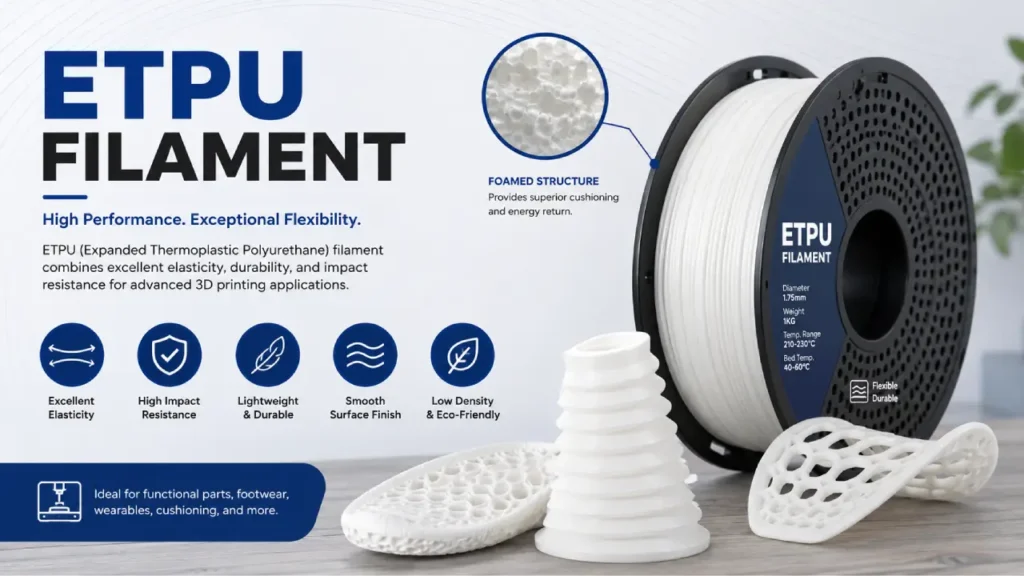
ETPU filament is a type of thermoplastic polyurethane filament known for its elasticity, durability, and lightweight properties.
It is commonly used in 3D printing and additive manufacturing to create flexible, resilient parts that can withstand repeated bending, stretching, and impact without losing shape. Its unique composition allows for high tensile strength and excellent abrasion resistance.
How Does ETPU Material Work
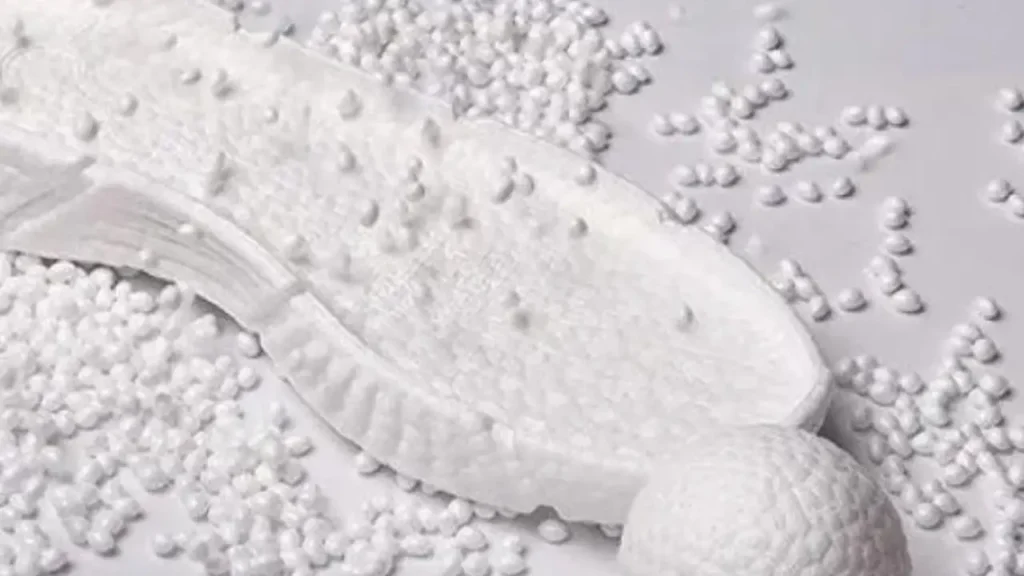
ETPU’s functionality stems from its unique expanded cellular structure. Here’s how ETPU works:
Expanded Bead Structure:
- ETPU is created by expanding TPU beads using heat and pressure. This process forms a closed-cell foam, where each bead acts like a tiny, air-filled capsule.
- When pressure is applied, such as when a foot strikes the ground, these capsules compress, absorbing the impact energy.
- Upon release of pressure, the air-filled cells quickly return to their original shape, releasing the stored energy. This “spring-back” effect is what provides ETPU’s exceptional energy return.
Energy Return and Cushioning:
- The consistent and rapid compression and rebound of the ETPU beads result in high energy return, meaning a significant portion of the impact energy is returned to the user. This creates a responsive and “bouncy” feel.
- The closed-cell structure also provides excellent cushioning, as the air within the cells acts as a shock absorber, protecting joints and muscles from impact.
- This combination of energy return and cushioning is what makes ETPU so effective in applications like athletic footwear, where performance and comfort are crucial.
In essence, ETPU’s performance is driven by the interplay of its elastic material properties and its unique foam structure, enabling it to efficiently absorb and return energy while providing superior cushioning.
What Is ETPU Material Used for?

ETPU material, also known as expanded thermoplastic polyurethane, is valued for its lightweight structure, resilience, and long-lasting elasticity. It combines cushioning comfort with strong rebound performance, making it suitable for products that require flexibility and impact resistance.
From sports gear to industrial parts, ETPU delivers durability, weather resistance, and reliable performance under repeated compression and dynamic loading conditions.
Construction and Insulation Products – ETPU is applied in sound insulation panels, vibration isolation pads, and lightweight building components. Its closed-cell structure provides thermal insulation and moisture resistance. These features make it suitable for residential and commercial projects that require durable, flexible, and energy-efficient material solutions.
Footwear Midsoles and Insoles – ETPU is widely used in athletic shoe midsoles because of its strong energy return and shock absorption properties. It reduces foot fatigue during running or long hours of walking. The material maintains elasticity after repeated compression, providing consistent cushioning, flexibility, and structural support in demanding sports and daily wear applications.
Sports and Protective Equipment – Thanks to its impact resistance and flexibility, ETPU is suitable for helmets, knee pads, and gym flooring systems. It absorbs sudden forces efficiently while remaining lightweight. This balance of protection and comfort makes it ideal for training facilities, recreational centers, and professional sports environments requiring reliable safety performance.
Automotive Interior Components – In automotive applications, ETPU is used for lightweight structural parts, seat cushioning layers, and vibration-dampening elements. Its durability and temperature stability allow it to perform well in hot and cold climates. The reduced weight also supports improved fuel efficiency while enhancing ride comfort and noise reduction.
Packaging and Protective Inserts – ETPU offers dependable cushioning for fragile goods during storage and transportation. It can be molded into precise shapes to protect electronics, instruments, and sensitive equipment. Its resilience allows repeated reuse without losing shock-absorbing capability, making it a practical solution for sustainable protective packaging systems.
ETPU vs TPU

ETPU and TPU are both based on thermoplastic polyurethane chemistry, but they differ significantly in structure, processing method, and performance characteristics. ETPU is an expanded, bead-foam version of TPU, while TPU is typically solid and dense.
Understanding their differences helps manufacturers choose the right material for cushioning, structural parts, or flexible industrial components.
Material Structure
TPU is a solid thermoplastic elastomer with a dense molecular structure. It is typically supplied in pellet form and processed through extrusion or injection molding. The compact structure gives TPU strong tensile strength, abrasion resistance, and consistent mechanical performance in thin-walled or precision components.
ETPU, on the other hand, is produced by expanding TPU into closed-cell foam beads. These beads are then molded together to form lightweight structures. The internal air pockets reduce density while enhancing cushioning and rebound, making ETPU significantly lighter and more impact-absorbing than solid TPU.
Weight and Density
TPU has a higher density because it does not contain internal air cells. This makes it suitable for applications requiring structural integrity, durability, and dimensional stability. Products made from TPU often feel substantial, especially in industrial or engineering uses.
ETPU features a much lower density due to its expanded foam structure. The lightweight composition reduces overall product weight, which is especially valuable in footwear and automotive applications. Despite being lighter, ETPU maintains elasticity and mechanical resilience under repeated compression.
Cushioning and Energy Return
TPU provides flexibility and moderate shock absorption, but its cushioning performance depends on thickness and design. It is often selected when controlled flexibility and surface durability are more important than soft rebound. TPU performs well in protective covers, hoses, and flexible components.
ETPU excels in cushioning and energy return because of its elastic foam bead structure. It compresses under impact and quickly rebounds to its original shape. This makes it highly suitable for athletic shoe midsoles, protective sports flooring, and applications requiring long-term dynamic comfort.
Processing and Manufacturing
TPU is commonly processed through injection molding, extrusion, blow molding, or calendaring. It flows when heated and solidifies upon cooling, allowing precise shapes and surface finishes. Manufacturers value TPU for its consistent processing behavior and compatibility with multi-material assemblies.
ETPU requires a bead foaming and steam-chest molding process. The expanded beads are fused together under heat and pressure. This process creates a distinct textured surface and limits thin-wall precision, but it enables lightweight structural foam parts with excellent shock absorption.
Application Areas
TPU is widely used in industrial hoses, cables, seals, wheels, films, and protective casings. It offers strong abrasion resistance, oil resistance, and mechanical durability. These properties make TPU suitable for demanding engineering and industrial environments.
ETPU is frequently applied in sports footwear, protective gear, automotive cushioning inserts, and impact-absorbing packaging. Its lightweight and rebound performance provide comfort and safety advantages. ETPU is particularly popular in performance-driven consumer products.
Here are some differences between ETPU and TPU:
| Aspect | ETPU | TPU |
|---|---|---|
| Structure | Expanded closed-cell foam beads | Solid thermoplastic elastomer |
| Density | Lightweight, low density | Higher density, compact |
| Cushioning | Excellent shock absorption and rebound | Moderate cushioning |
| Processing | Steam chest bead molding | Injection molding, extrusion |
| Typical Applications | Footwear midsoles, sports gear | Hoses, seals, industrial parts |
EVA vs ETPU

When comparing EVA (ethylene-vinyl acetate) and ETPU (expanded thermoplastic polyurethane), it’s essential to understand their distinct properties and applications. EVA is a widely used foam material, known for its flexibility and cushioning.
It’s cost-effective and prevalent in various products, especially footwear. However, it can lack durability and responsiveness compared to ETPUE-TPU; on the other hand, it is engineered for enhanced energy return and long-lasting performance. It consists of expanded thermoplastic polyurethane beads, creating a springy and resilient structure.
Here are the key differences between EVA and ETPU as follows:
EVA:
- Relatively inexpensive.
- Good flexibility and cushioning.
- Less durable compared to E-TPU.
- Can lose cushioning properties over time.
- less energy return.
E-TPU:
- Higher cost.
- Excellent energy return and responsiveness.
- Superior durability.
- Maintains cushioning properties over extended use.
- Higher energy return.
Here’s a comparison of the key differences between EVA and ETPU:
| Feature | EVA | E-TPU |
| Cost | Lower | Higher |
| Cushioning | Good | Excellent |
| Durability | Moderate | High |
| Energy Return | Lower | Higher |
| Flexibility | Good | Very Good |
| Temperature resilience | less | more |
In essence, while EVA provides a cost-effective cushioning solution, E-TPU offers superior performance and durability, particularly in applications requiring high energy return, such as athletic footwear.
Which is Better, EVA or ETPU?
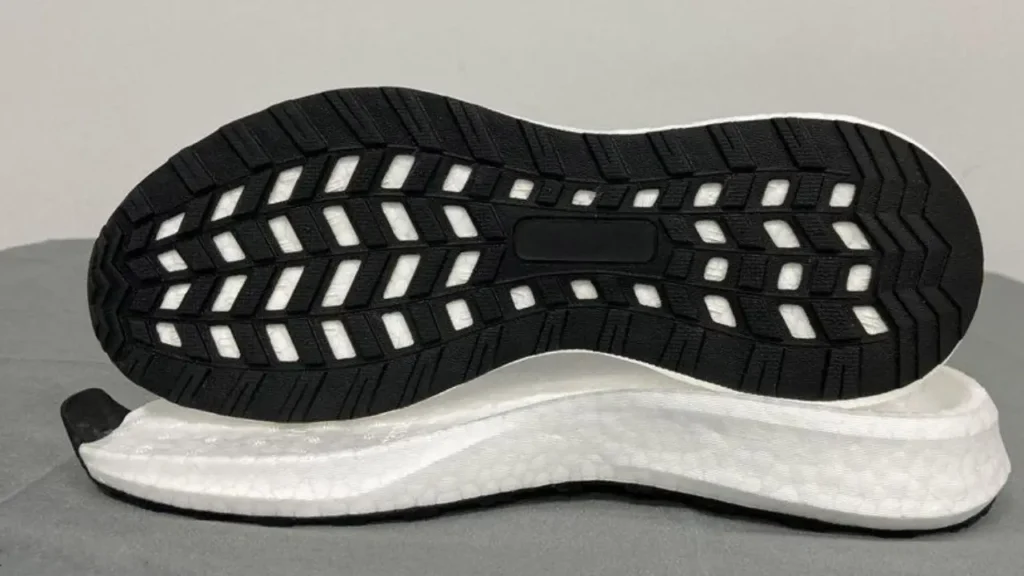
Choosing between EVA and ETPU depends on the specific application and performance requirements. Both materials are lightweight, flexible, and shock-absorbing, but they differ in durability, elasticity, and long-term resilience.
Understanding their unique properties helps manufacturers, designers, and consumers select the right material for footwear, sports equipment, and industrial applications.
- Cost vs Performance – EVA is generally more cost-effective for lightweight, low-impact applications. ETPU offers higher performance and longevity, making it worth the investment for high-stress, high-wear products. Understanding the trade-off helps businesses balance budget and functionality effectively.
- Durability – ETPU is more durable than EVA, resisting wear, compression, and repeated impact. Its closed-cell structure maintains shape over time, making it ideal for long-lasting footwear soles, industrial parts, and applications where extended material performance is critical compared to EVA, which can compress and deform faster.
- Elasticity and Cushioning – ETPU offers superior elasticity and energy return, providing enhanced cushioning and rebound. EVA is softer and lighter, offering comfort for casual applications but less resilience under heavy use. Choosing the right material ensures optimal performance and comfort for the intended activity.
- Temperature Resistance – ETPU maintains its properties across a wider temperature range, resisting heat and cold without losing flexibility. EVA may become softer in heat or brittle in extreme cold, limiting its use in industrial or high-performance outdoor applications.
- Environmental Considerations – Both materials can be recycled, but ETPU often supports longer lifecycle applications due to its durability. Selecting ETPU can reduce waste from frequent replacement, making it a more sustainable option for products requiring extended use.
Conclusion
ETPU’s unique expanded thermoplastic polyurethane structure delivers exceptional energy return and durability, making it ideal for high-performance applications. Its closed-cell foam construction provides consistent cushioning and resilience, outperforming traditional materials. This innovative material adapts to impacts, offering a dynamic and responsive experience.
Ultimately, ETPU represents a significant advancement in material science, bridging the gap between comfort and performance. Its versatility makes it a valuable asset in various industries, from footwear to sports equipment.
Experience the superior performance of ETPU. Quote our range of ETPU products from us and elevate your next project.