
Choosing the right insulation panel matters for cost control, energy efficiency, and long-term performance. EPS and PUF panels are two widely used options in cold rooms, warehouses, and industrial buildings. Understanding how they differ helps buyers avoid mismatched materials and unexpected operating expenses later.
This article compares EPS vs PUF panels from multiple angles, including insulation value, structure, installation, durability, and budget considerations. By breaking down real differences instead of marketing claims, you can clearly see which panel fits your project requirements, climate conditions, and usage expectations more accurately.
What are EPS Panels?
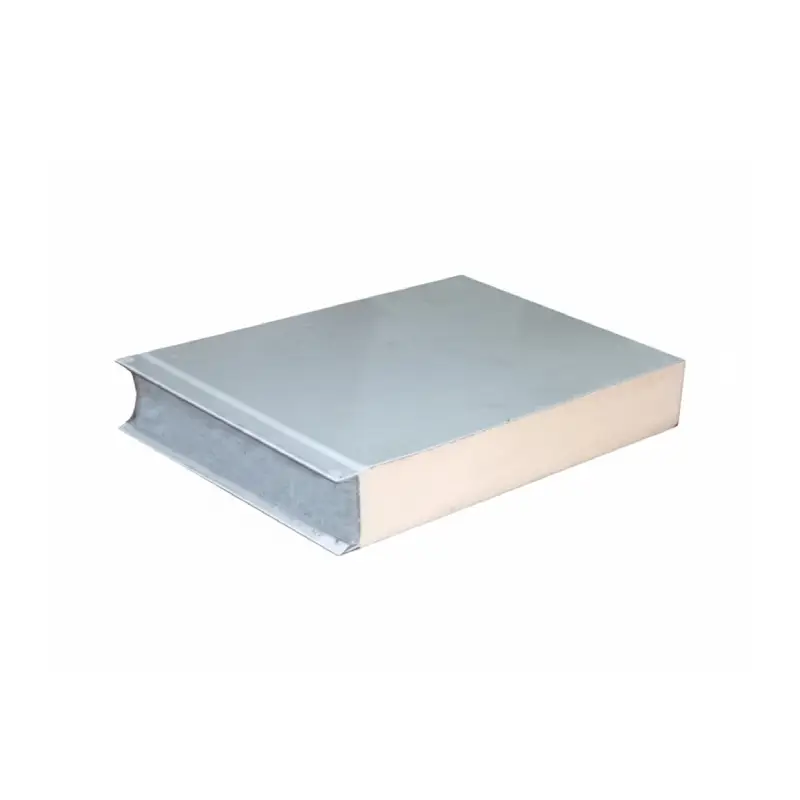
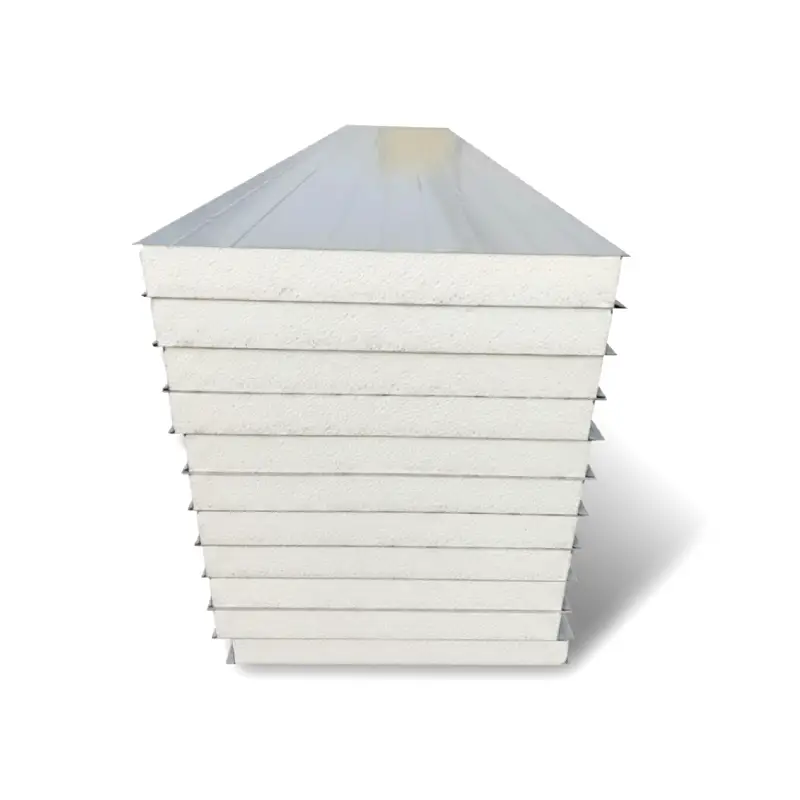
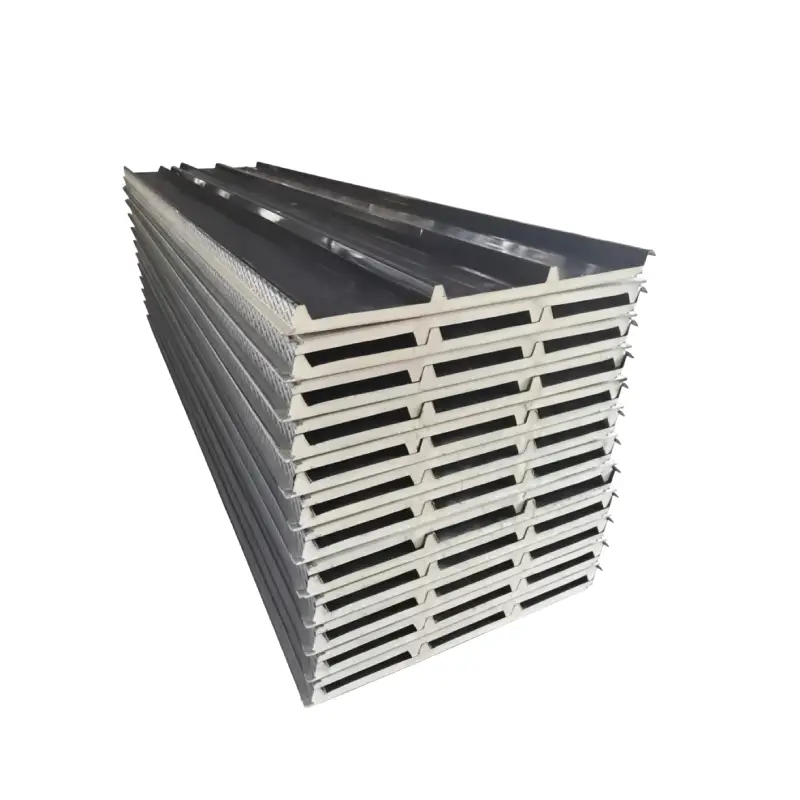
EPS panels are insulated sandwich panels made with expanded polystyrene foam as the core material. They are designed to provide thermal insulation, structural support, and lightweight performance.
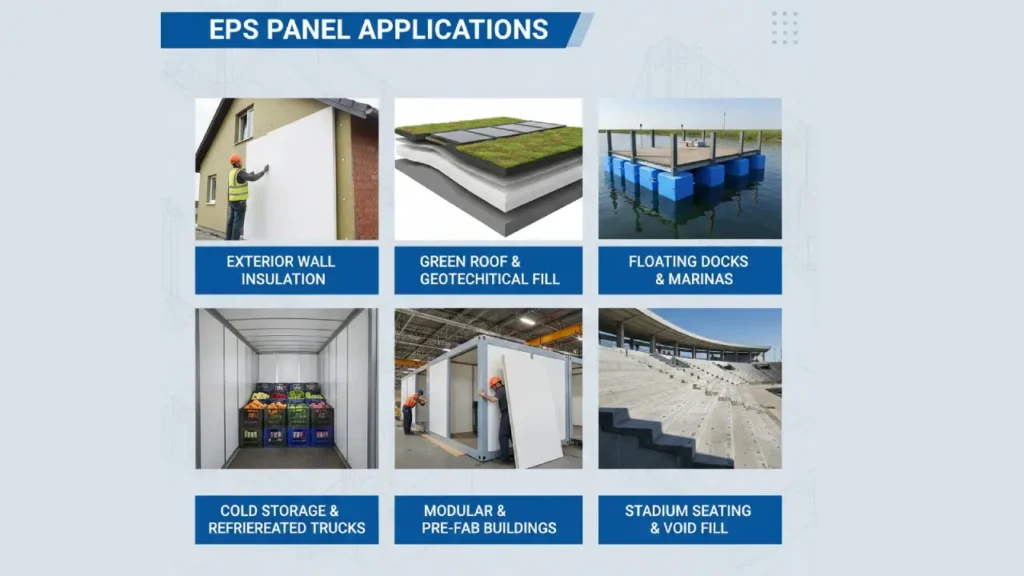
- Exterior Wall Insulation: EPS panels are installed on exterior walls to create a continuous insulation layer that reduces thermal bridging. They help buildings maintain more stable indoor temperatures, improve energy efficiency, support cladding systems, and contribute to comfortable residential, commercial, institutional, and light-industrial spaces.
- Roof Insulation: Roof assemblies use EPS panels to reduce heat gain and heat loss through the building envelope. Their light weight can simplify handling, while various panel thicknesses help designers meet project-specific thermal requirements in flat roofs, pitched roofs, warehouses, retail facilities, and homes.
- Foundation Insulation: EPS panels are placed along foundation walls, beneath slabs, and around perimeter areas to reduce heat loss to surrounding soil. Their moisture-resistant properties make them useful for below-grade applications, helping protect conditioned spaces, improve comfort, and support efficient building performance year-round.
- Insulated Concrete Forms: EPS panels and foam components are used in insulated concrete form systems that hold concrete during wall construction. After the pour, they remain as insulation, creating reinforced concrete walls with continuous thermal protection, improved comfort, and reduced energy demand for heating and cooling.
- Structural Insulated Panels: EPS is commonly used as the insulating core inside structural insulated panels, or SIPs. These factory-made building components combine foam insulation with structural facings, enabling faster enclosure construction, strong thermal performance, reduced jobsite waste, and consistent wall or roof assembly quality.
- Cold Storage Facilities: Refrigerated warehouses, food-processing rooms, walk-in coolers, and freezer facilities use EPS panels to help maintain controlled temperatures. The panels reduce thermal transfer, support refrigeration efficiency, and help protect temperature-sensitive inventory such as food, beverages, pharmaceuticals, flowers, and other perishable goods.
- Prefabricated Buildings: Modular homes, site offices, temporary classrooms, portable cabins, and prefabricated structures often include EPS panels. Their low weight and insulation performance support faster assembly, easier transportation, reduced energy use, and practical construction solutions for projects requiring predictable schedules and controlled manufacturing.
- Interior Partition Systems: EPS panels can be incorporated into lightweight interior walls where insulation, sound reduction, or temperature separation is needed. They are useful in offices, clean areas, production rooms, storage spaces, and commercial interiors that require flexible layouts without adding excessive structural weight.
- Agricultural Buildings: Farms use EPS panels in poultry houses, livestock buildings, greenhouses, dairy facilities, and produce storage areas. By helping regulate interior temperatures, panels can support animal comfort, reduce heating and cooling costs, protect crops, and improve environmental consistency in sensitive agricultural operations.
- Facade and Cladding Backing: EPS panels can sit behind exterior render, stucco, or cladding systems as an insulating backing layer. They provide a smooth substrate, help improve envelope thermal performance, and allow designers to create decorative exterior finishes without relying solely on heavier masonry materials.
EPS Panel Benefits
EPS panels are widely used in construction and cold storage projects because they balance insulation performance, cost control, and installation efficiency. Their stable structure and lightweight design make them suitable for both industrial and commercial applications. Below are the main benefits explained in detail.
- Durability and Moisture Resistance — EPS panels resist moisture absorption and maintain their shape over time. When properly installed and sealed, they perform reliably in humid or cold environments, reducing risks of insulation degradation and helping extend the service life of buildings and cold storage facilities.
- Thermal Insulation Performance — EPS panels provide consistent insulation by reducing heat transfer through walls and roofs. The closed-cell foam structure helps maintain stable indoor temperatures, lowering energy consumption for cooling or heating systems and supporting long-term operational efficiency in controlled environments.
- Lightweight and Easy Installation — The low weight of EPS panels simplifies transportation and on-site handling. This allows faster installation, reduced labor costs, and less structural load on buildings, making them ideal for large-scale projects, renovations, and prefabricated construction where speed and efficiency matter.
- Cost-Effective Solution — Compared with other insulation panels, EPS panels offer a practical balance between performance and price. They help reduce upfront material costs while still delivering dependable insulation, making them attractive for budget-conscious projects without sacrificing basic thermal requirements.
What are PUF Panels?
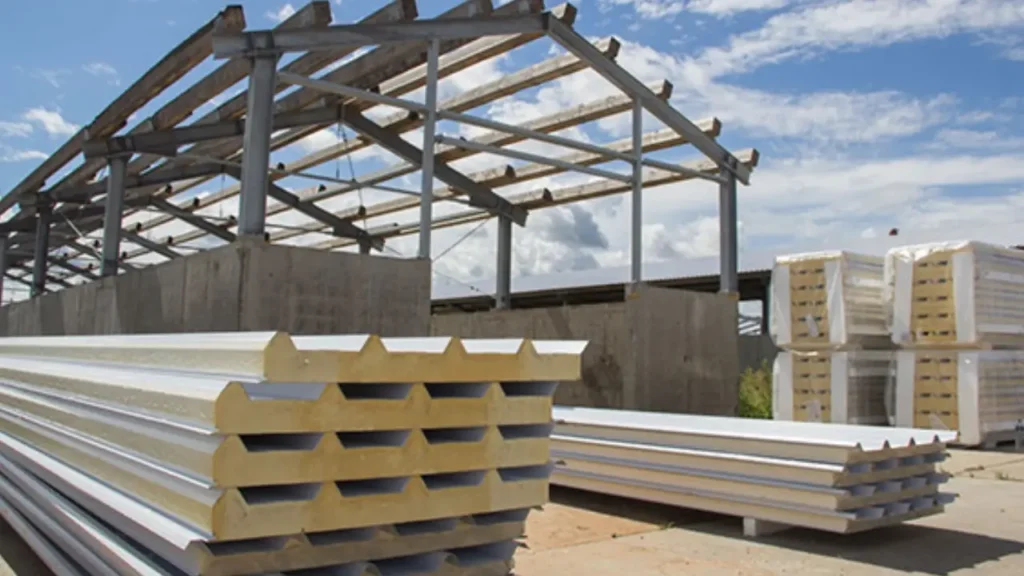
PUF panels are sandwich panels with a polyurethane foam core, known for excellent thermal insulation and low thermal conductivity.
Here are some applications of PUF panels:
- Cold Storage Rooms: PUF panels are widely used for cold rooms that store fresh produce, dairy products, meat, seafood, beverages, and other perishable goods. Their insulated core helps limit heat gain, support refrigeration efficiency, maintain stable storage temperatures, and protect product quality throughout handling and distribution.
- Freezer and Blast Freezer Facilities: Freezer rooms and blast-freezing areas use thicker PUF panels to manage extreme temperature differences between indoor and outdoor environments. Properly specified panels help reduce heat transfer, control condensation risks, lower refrigeration loads, and protect frozen foods, ice cream, and temperature-sensitive inventory.
- Industrial Roofing: PUF roof panels are installed on factories, warehouses, workshops, logistics buildings, and industrial sheds. They combine weather protection with insulation, helping reduce solar heat gain, improve interior comfort, minimize energy costs, and provide a lightweight roofing solution that can be installed efficiently.
- Industrial Wall Cladding: PUF wall panels provide insulated exterior and interior wall systems for manufacturing facilities, warehouses, and pre-engineered buildings. They create a finished enclosure quickly, reduce thermal transfer, help separate working zones, and offer a durable surface suitable for demanding industrial operations and controlled environments.
- Food Processing Plants: Food-processing facilities use PUF panels for insulated walls, ceilings, partitions, and production rooms. Smooth metal facings can support hygienic, easy-to-clean surfaces, while the foam core helps maintain controlled temperatures for processing, packaging, preparation, and short-term storage of food products.
- Pharmaceutical Facilities: Pharmaceutical warehouses, processing areas, staging rooms, and temperature-controlled storage spaces use PUF panels to support stable environmental conditions. The panels can help reduce thermal fluctuations, create clean partitioned areas, and improve energy efficiency where medicines, biologics, laboratory materials, or sensitive supplies require protection.
- Clean Rooms: PUF panels are used in clean rooms because they can form smooth, sealed wall and ceiling surfaces with insulated cores. They support controlled environments in pharmaceutical production, electronics manufacturing, laboratories, medical operations, and specialized assembly areas that require cleanliness and temperature consistency.
- Prefabricated Buildings: Portable cabins, modular offices, temporary classrooms, site accommodations, and prefabricated buildings often use PUF panels for walls and roofs. Their low weight, ready-finished surfaces, and insulation properties help shorten construction schedules, simplify transport, and improve indoor comfort in rapidly deployed structure.
- Warehouses and Logistics Hubs: PUF panels are used in warehouses and logistics facilities where insulation, speed of construction, and weather protection are important. They can form roof and wall envelopes that reduce internal heat gain, improve working conditions, and support storage operations for temperature-sensitive or general inventory.
- Agricultural Buildings: Poultry houses, dairy facilities, produce-storage rooms, ripening chambers, and other agricultural structures can use PUF panels to help manage interior temperatures. Better thermal control supports animal comfort, reduces exposure to outdoor weather changes, protects harvested products, and may improve operational energy efficiency.
PUF Panel Benefits
PUF panels are popular for cold storage and construction projects due to their superior insulation, durability, and structural strength. They help maintain controlled temperatures efficiently while reducing energy costs. Below are the main benefits of PUF panels explained in detail.
- Moisture and Fire Resistance — Many PUF panels are designed to resist moisture and offer fire-retardant properties. This helps prevent insulation degradation, reduces risks in industrial environments, and ensures safety and longevity in refrigerated or high-humidity spaces.
- Excellent Thermal Insulation — PUF panels have very low thermal conductivity, providing superior insulation. They help maintain stable indoor temperatures, reducing energy consumption for refrigeration or heating systems. This makes them ideal for cold storage, freezers, and temperature-sensitive industrial applications.
- Lightweight and Easy Installation — Despite their strength, PUF panels are lightweight, which simplifies handling, transportation, and installation. Quick assembly reduces labor costs and construction time, making them suitable for prefabricated structures, warehouses, and large-scale projects where efficiency is important.
- Durability and Strength — PUF panels offer strong structural integrity and long-term durability. The foam core resists deformation, while the facings protect against impacts and environmental wear. Properly installed panels maintain performance for years, even under demanding conditions.
EPS vs PUF Panels
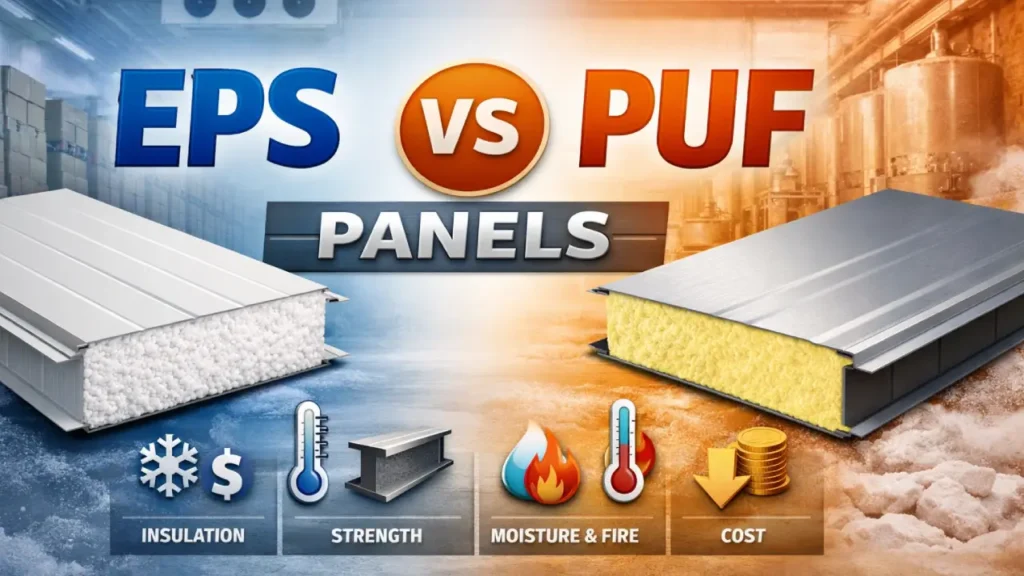
Choosing the right insulation panel is crucial for energy efficiency, cost management, and long-term performance. EPS and PUF panels are widely used in cold storage, warehouses, and industrial buildings, but they differ in insulation, strength, installation, durability, and price. Understanding these differences helps select the most suitable panel for your project.
Thermal Insulation
EPS panels provide good insulation with moderate thermal resistance. They are suitable for standard cold storage and general building applications, keeping temperatures stable without excessive cost.
PUF panels, on the other hand, offer lower thermal conductivity, providing superior insulation for extreme temperature conditions. This makes them ideal for freezers, deep cold storage, and sensitive industrial environments.
Structural Strength
EPS panels are lightweight and provide moderate structural support. They are easy to handle but may require additional reinforcement in heavy-duty applications.
PUF panels are stronger due to the rigid polyurethane core, offering better load-bearing capacity and long-term stability, especially in large-scale industrial or commercial constructions.
Moisture and Fire Resistance
EPS panels resist moisture reasonably well but can absorb water over time if not sealed properly, which may affect insulation performance.
PUF panels are more moisture-resistant and often come with fire-retardant facings, reducing risks of water damage and improving safety in sensitive environments.
Installation and Handling
EPS panels are lightweight and easy to transport, cut, and install, saving labor costs and installation time for moderate-scale projects.
PUF panels are also lightweight but slightly more rigid, requiring careful handling during installation. However, they allow faster assembly in prefabricated and large-scale cold storage projects.
Cost and Availability
EPS panels are generally more cost-effective, making them suitable for budget-conscious projects while still providing reliable insulation.
PUF panels are more expensive due to superior thermal performance and structural strength but can reduce long-term energy costs in extreme conditions.
Here are some differences between EPS and PUF panels:
| Aspect | EPS Panels | PUF Panels |
|---|---|---|
| Thermal Insulation | Moderate thermal resistance | Superior insulation, lower conductivity |
| Structural Strength | Moderate support | High load-bearing capacity |
| Moisture Resistance | Moderate, may absorb water | High, better moisture protection |
| Fire Resistance | Limited, may need additional coating | Often fire-retardant |
| Installation Ease | Lightweight, easy to cut & install | Lightweight, slightly rigid, careful handling |
| Cost | More affordable | Higher upfront cost, energy savings long-term |
How to Choose EPS and PUF Panels?
Choosing the right insulation panels is essential for energy efficiency, cost-effectiveness, and long-term performance. EPS and PUF panels each have strengths, so your decision should consider temperature requirements, installation conditions, budget, and durability. Here are key points to guide your selection.
- Application and Usage — Determine the panel’s purpose: cold rooms, warehouses, or industrial buildings. EPS panels are versatile for general applications, while PUF panels are ideal for high-performance refrigeration, industrial storage, or areas with strict thermal control requirements.
- Project Temperature Requirements — Consider the operating temperature of your facility. EPS panels are suitable for standard cold storage and moderate temperatures, while PUF panels provide superior insulation for extreme cold conditions, deep freezers, or temperature-sensitive industrial environments. Choosing the right panel ensures consistent performance.
- Budget Considerations — EPS panels are generally more cost-effective upfront, making them suitable for projects with tight budgets. PUF panels cost more initially but can reduce long-term energy expenses due to better insulation, making them a wise choice for projects prioritizing energy efficiency.
- Installation and Handling — EPS panels are lightweight, easy to cut, and simple to install, reducing labor time and costs. PUF panels are slightly more rigid, requiring careful handling, but they allow faster assembly for prefabricated and large-scale projects with proper planning.
- Durability and Maintenance — Evaluate environmental conditions and panel longevity. EPS panels perform well in standard settings but may absorb moisture if not sealed. PUF panels offer stronger structural integrity, higher moisture resistance, and longer service life in demanding environments.
Conclusion
EPS and PUF panels each have clear strengths. PUF panels offer lower thermal conductivity and are often chosen for extreme temperature control. EPS panels stand out for balanced insulation, stable performance, easier handling, and more economical pricing, making them suitable for many commercial and industrial applications worldwide.
From a practical perspective, the right choice depends on project scale, operating temperature, installation speed, and long-term cost planning. Many buyers find EPS panels deliver reliable insulation without excessive material costs, especially for coolrooms, freezers, warehouses, and prefabricated structures with standard thermal demands.
If you are sourcing insulation panels at scale, working with a direct supplier matters. We provide wholesale EPS panels with consistent specifications, flexible sizing, and stable supply for global projects. Contact us to get dependable EPS panel solutions tailored to your cold storage or construction needs.