
ICF and concrete block are both durable wall-building systems, but they work very differently. ICF uses interlocking EPS foam forms that remain in place around a poured concrete core, creating structure and continuous insulation in one step.
Concrete block, or CMU, uses individual masonry units bonded with mortar to form a solid wall. It is a familiar, versatile option, but it usually needs added insulation and finishing to match ICF’s thermal performance.
What Is ICF?
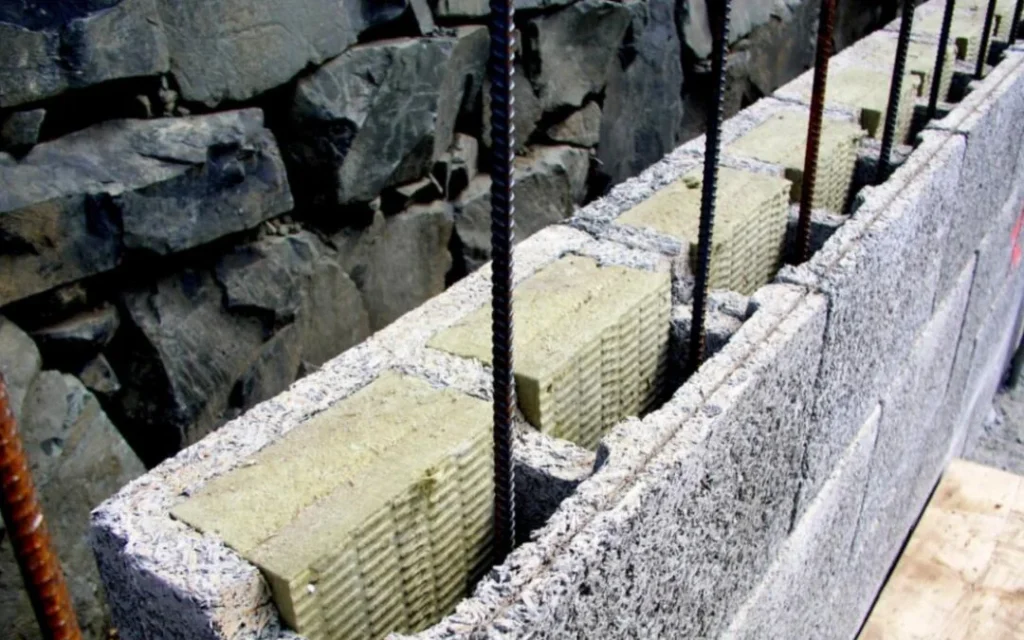
ICF, or Insulated Concrete Form, is a building system made from interlocking expanded polystyrene foam blocks. The hollow forms are stacked, reinforced with steel, and filled with concrete, leaving the foam in place as permanent insulation for strong, energy-efficient walls.
Benefits of ICF
- Design flexibility: ICF can be used for foundations, exterior walls, basements, and multi-story structures. The forms can be cut and shaped to accommodate curves, corners, openings, and custom architectural details without compromising insulation or strength.
- Excellent energy efficiency: The continuous foam insulation on both sides of the concrete core reduces heat loss and thermal bridging. This helps maintain stable indoor temperatures, lowers heating and cooling demand, and can reduce long-term energy costs for homes and commercial buildings.
- Strong and durable construction: The reinforced concrete core creates a solid, load-bearing wall with high resistance to wind, impact, fire, and moisture-related damage. When built correctly, ICF walls provide long-lasting structural performance and require less maintenance than many conventional wall systems.
- Faster installation: Lightweight ICF blocks fit together like building blocks, allowing walls to be assembled quickly without heavy masonry work. Because insulation, formwork, and backing for finishes are combined in one system, construction can be simpler and more efficient.
- Improved comfort and quietness: The combination of dense concrete and insulating foam helps block outside noise and reduce drafts. This creates a quieter, more comfortable indoor environment while supporting consistent temperatures throughout the building.
What is a Concrete Block?
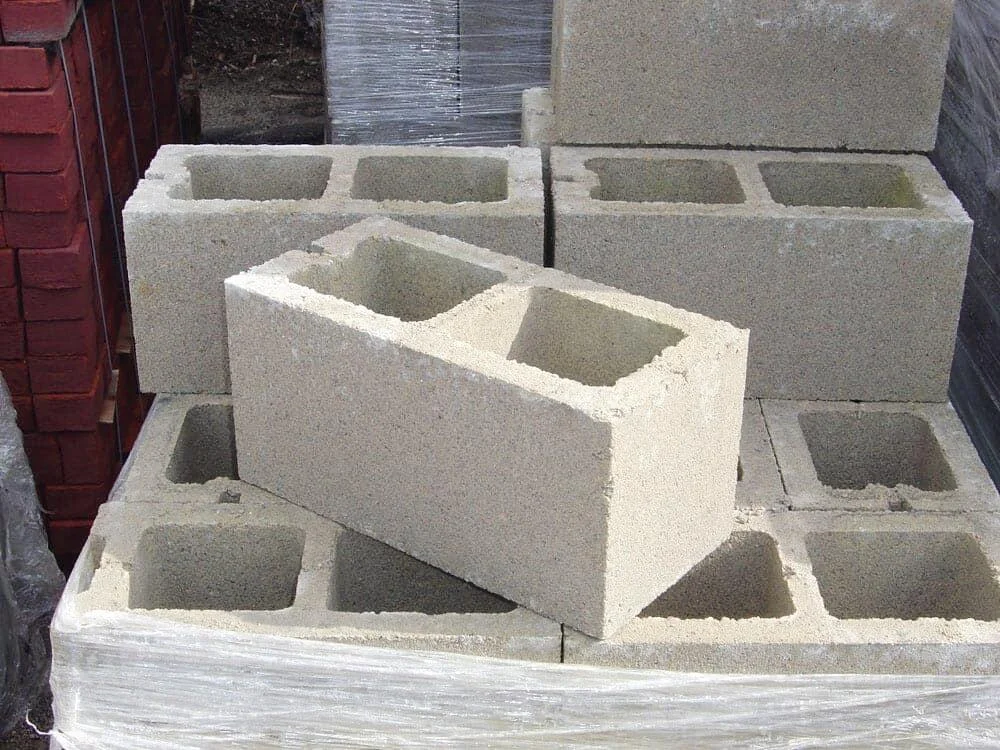
A concrete block, also called a concrete masonry unit or CMU, is a rectangular building unit made from cement, aggregates, and water.
The concrete blocks are stacked with mortar to create strong walls, foundations, retaining structures, and other durable masonry construction.
Benefits of Concrete Blocks
- Low maintenance: Once installed and properly finished, concrete block walls require minimal upkeep. They do not rot, warp, or attract insects, and periodic inspection, repointing, and surface sealing are usually enough to keep them in good condition.
- Proven strength and durability: Concrete blocks form dense, load-bearing walls that resist compression, weather exposure, and everyday wear. Their solid masonry construction makes them a dependable choice for foundations, exterior walls, and structures that need long-term performance.
- Fire and pest resistance: Because concrete blocks are non-combustible and do not provide food or nesting material for pests, they offer strong protection against fire, termites, rodents, and mold. This makes them suitable for buildings where safety and resilience are priorities.
- Cost-effective material: Concrete blocks are widely available and often cost less than many alternative wall systems. Their standardized sizes support straightforward estimating, reduce material waste, and make them a practical option for large or budget-conscious projects.
- Flexible design options: Blocks can be used for straight walls, corners, columns, retaining walls, and decorative surfaces. Different sizes, textures, colors, and finishes allow builders to create both functional structures and attractive architectural details.
ICF vs Concrete Blocks
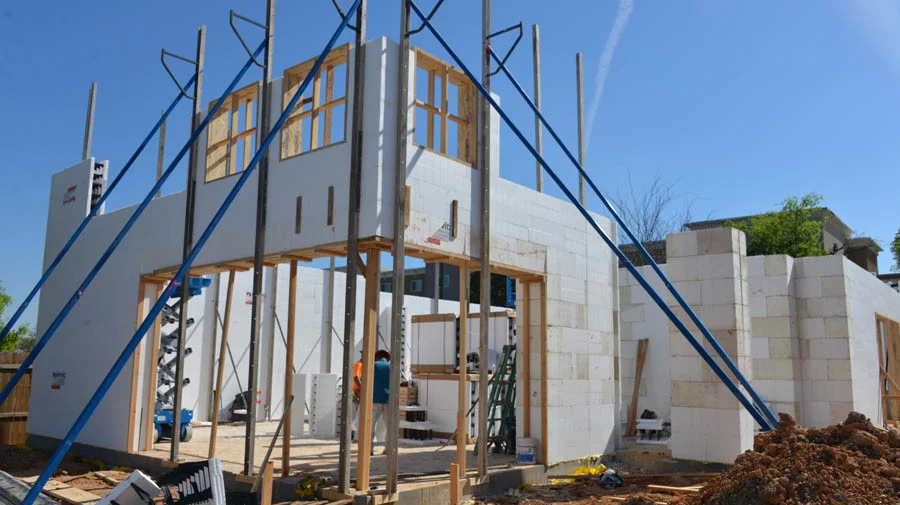
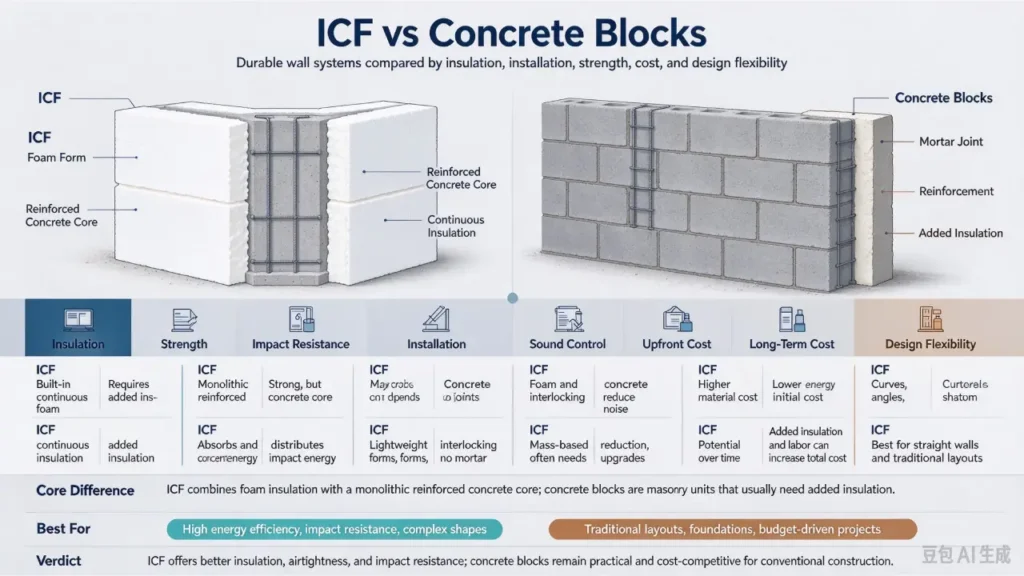
ICF and concrete block are both durable wall systems, but they differ in insulation, installation, strength, cost, and design flexibility. ICF combines foam forms with a reinforced concrete core, while concrete blocks are mortar-bonded masonry units that usually need added insulation.
Energy Efficiency
ICF provides continuous foam insulation on both sides of its concrete core, reducing heat transfer and thermal bridging. This helps maintain steady indoor temperatures and can lower heating and cooling demand throughout the year.
Concrete blocks offer useful thermal mass but little built-in insulation. To reach comparable energy performance, they generally require interior or exterior insulation, which adds materials, labor, and construction layers.
Strength and Durability
ICF creates a monolithic reinforced-concrete wall enclosed in permanent foam forms. Its continuous structure helps distribute loads and resist high winds, seismic forces, moisture, pests, and everyday wear.
Concrete blocks are also strong and long-lasting, especially when properly reinforced and constructed. However, individual mortar joints can become weak points, so reinforcement, quality workmanship, and maintenance are important for demanding applications.
Impact Resistance
ICF walls absorb and spread impact energy through the combined foam-and-concrete assembly. This makes them well suited to areas exposed to storms, flying debris, hail, or accidental vehicle impact.
Concrete blocks resist many everyday impacts but may crack under concentrated force, particularly where joints or unreinforced sections are present. Steel reinforcement and proper detailing improve their performance in harsh conditions.
Installation Speed
ICF blocks are lightweight and interlock without mortar, allowing walls to be assembled quickly. After reinforcement is installed, the forms are filled with concrete, often reducing labor time and simplifying the construction sequence.
Concrete block construction requires each unit to be laid, aligned, leveled, and mortared. This traditional process demands skilled masonry labor and more time, especially for large walls or complex layouts.
Insulation and Sound Control
ICF delivers high insulation value and an airtight building envelope because the foam remains in place after the concrete cures. The dense core and foam layers also reduce airborne noise from outside and between spaces.
Concrete blocks provide some sound reduction through mass, but they do not insulate as effectively on their own. Added insulation and air-sealing measures are usually needed to match ICF’s thermal and acoustic performance.
Cost Considerations
ICF often has a higher upfront material cost, but its insulation, faster installation, and reduced energy use can deliver long-term savings. Fewer separate insulation and finishing layers may also simplify certain parts of the build.
Concrete blocks generally cost less at the beginning and remain a budget-friendly choice for many projects. However, additional insulation, waterproofing, labor, and finishing can increase the total installed cost over time.
Design Flexibility
ICF can be cut and formed into curves, angles, and custom shapes while maintaining insulation and structural integrity. It accepts stucco, brick veneer, siding, stone, and many other exterior finishes.
Concrete blocks work well for traditional layouts, straight walls, foundations, and utilitarian structures. They can be painted, clad, or finished decoratively, but their rectangular units offer less freedom for complex shapes.
Sustainability
ICF can support greener construction by reducing operational energy use and limiting the need for separate insulation materials. Its long service life and lower heating and cooling requirements contribute to a smaller lifetime environmental footprint.
Concrete blocks are durable and can be reused or recycled in some applications, but their energy performance depends heavily on added insulation. Without those upgrades, buildings may consume more energy in extreme climates.
Here is the chart showing you the differences between ICF and concrete blocks:
| Aspect | ICF | Concrete Block |
|---|---|---|
| Insulation | Built-in continuous foam insulation with high R-value | Requires added insulation for comparable performance |
| Strength | Monolithic reinforced concrete core | Strong masonry, but depends on reinforcement and mortar joints |
| Installation | Faster, lightweight interlocking forms, no mortar | Slower, mortar-based, skilled masonry labor required |
| Impact resistance | Absorbs and distributes impact energy well | Strong, but more prone to cracking under concentrated impact |
| Sound control | Excellent due to foam and concrete combination | Good mass-based reduction, but may need added soundproofing |
| Upfront cost | Usually higher initially | Usually lower initially |
| Long-term cost | Potential savings through lower energy use | Additional insulation and labor can raise total cost |
| Design flexibility | Suitable for curves, angles, and custom shapes | Best for traditional, rectangular, and utilitarian designs |
ICF and Concrete Block Impact Resistance
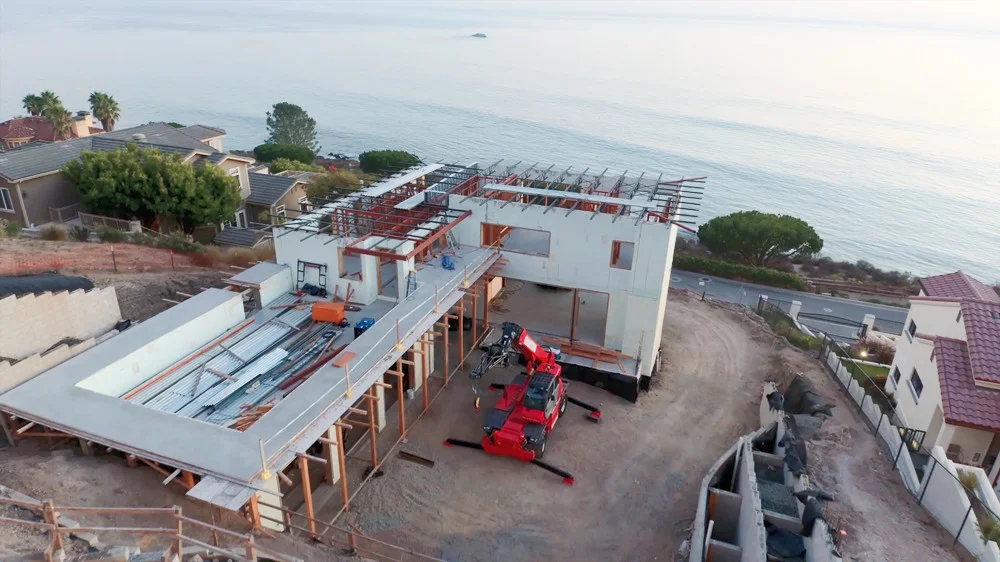
ICF (Insulated Concrete Forms) and concrete blocks are both highly durable materials, but they offer different levels of impact resistance.
Understanding how they perform under various conditions helps in determining which is best suited for specific building needs, especially in areas prone to harsh weather or external forces.
- Long-Term Durability: ICFs generally maintain their structural integrity longer because of their ability to absorb and distribute impacts more evenly. Concrete blocks, when reinforced, provide solid long-term impact resistance but may require more maintenance and care over time.
- ICF Impact Resistance: The combination of foam and concrete creates a monolithic structure that absorbs and disperses impact energy. This feature makes ICF particularly effective in resisting damage from storms, earthquakes, or even impacts from vehicles.
- Concrete Block Impact Resistance: Concrete blocks are strong but can be more susceptible to cracking when exposed to high-impact forces. However, when reinforced with steel, they can perform similarly to ICFs, offering solid protection in most circumstances.
- Weather-Resistant Performance: ICFs offer excellent resistance to weather-related impacts, such as wind and hail, due to the structural integrity provided by the foam and concrete combination. Concrete blocks, while sturdy, may be more vulnerable to severe weather unless properly reinforced.
- Thermal Impact Resistance: ICFs can better withstand temperature-related impacts, as the foam insulation helps to prevent sudden shifts in thermal pressure, which might cause cracking in traditional concrete blocks. This makes ICF a more reliable choice in regions with extreme temperature fluctuations.
Energy Efficiency Of ICF and Concrete Block
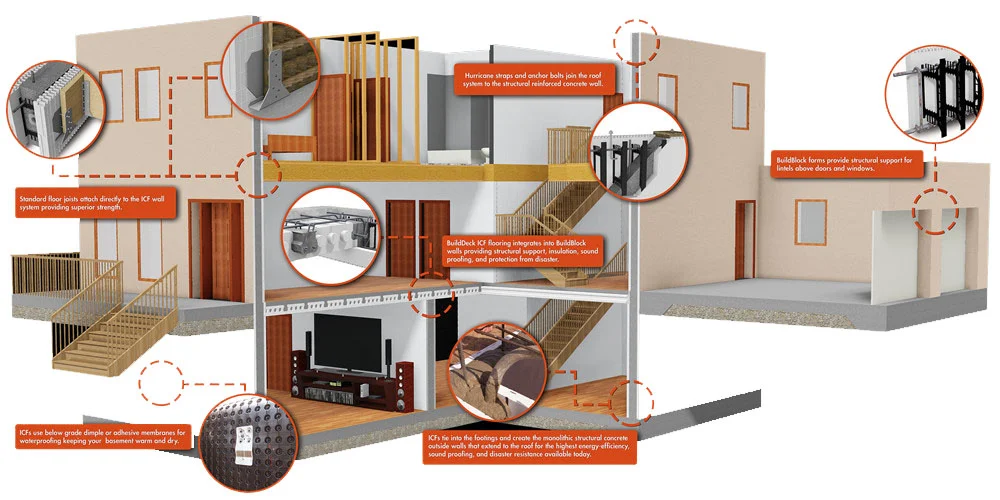
Energy efficiency is a critical factor in modern construction, and both ICF (Insulated Concrete Forms) and concrete blocks offer distinct advantages. Understanding how each material contributes to energy savings can help in selecting the best solution for reducing heating and cooling costs while ensuring comfort in buildings.
Sustainability and Green Building: ICF construction is considered more sustainable because of its ability to reduce energy consumption significantly. By minimizing reliance on heating and cooling systems, ICF homes and buildings have a lower carbon footprint. Concrete blocks, though durable, typically do not offer the same level of energy efficiency without added insulation.
ICF Energy Efficiency: ICF provides superior energy efficiency due to the foam insulation on both sides of the concrete core. This insulation minimizes heat transfer, keeping indoor temperatures stable. The thermal mass of the concrete absorbs heat during the day and releases it at night, maintaining a comfortable environment.
Concrete Block Energy Efficiency: Concrete blocks have a higher thermal mass than traditional wood framing, meaning they store heat and help moderate temperature fluctuations. However, without added insulation, concrete blocks are less efficient than ICFs, leading to higher energy consumption in buildings, particularly in extreme climates.
Insulation and Air Leakage: ICF walls have built-in insulation, effectively preventing air leaks and minimizing drafts. The continuous foam insulation seals gaps, creating an airtight building envelope. In contrast, concrete blocks require additional insulation layers, which can increase installation time and costs while potentially allowing more air leakage.
Long-Term Energy Savings: ICF buildings provide long-term energy savings due to their high R-value and thermal performance. The increased insulation helps reduce HVAC system usage, lowering energy bills. Concrete blocks, while durable, generally require more energy for heating and cooling, especially in areas with extreme temperatures.
ICF Installation and Concrete Block
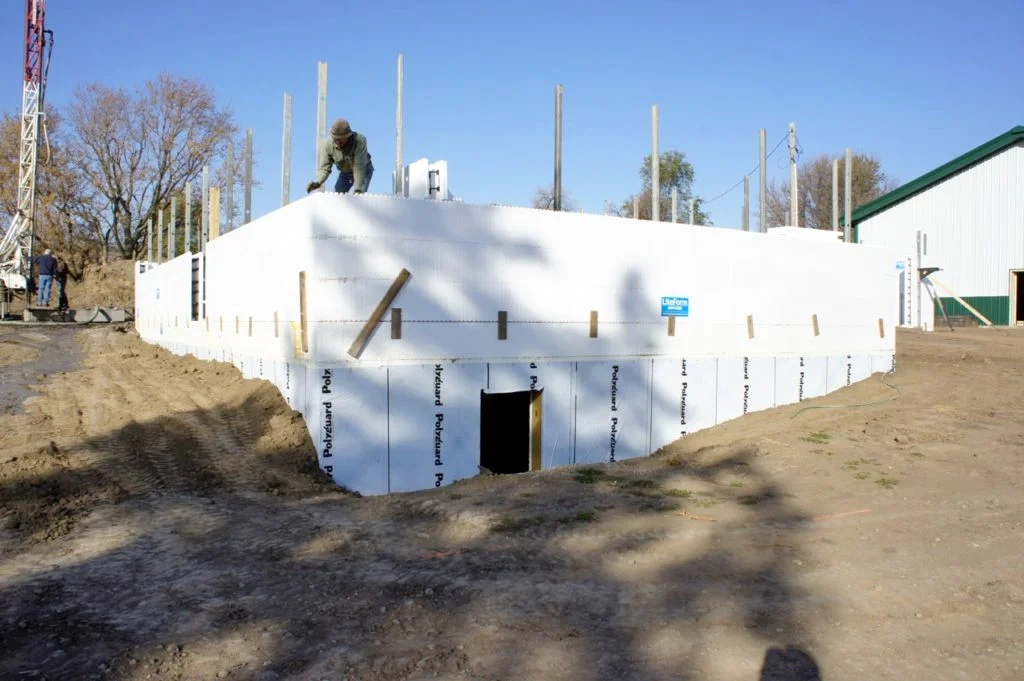
The ease of installation is an important factor when choosing between ICF (Insulated Concrete Forms) and concrete blocks. Both offer advantages, but their installation processes differ, influencing the overall construction timeline and labor requirements. Understanding these differences can help determine the best option for specific building projects.
- Time Efficiency: Due to their interlocking design and lightweight material, ICFs significantly reduce the time spent on installation. A building can be completed more quickly, allowing for faster project timelines. Concrete block construction, while durable, typically takes longer to install due to the more labor-intensive process of laying each block and waiting for mortar to cure.
- ICF Installation Ease: ICF systems are designed for quick and easy assembly, with blocks that interlock without mortar. This eliminates the need for traditional masonry skills, reducing labor costs and construction time. The blocks are lightweight, which simplifies handling and positioning, making them a user-friendly option for both small and large-scale projects.
- Concrete Block Installation Ease: Concrete blocks require mortar for assembly, which adds complexity and time to the installation process. Each block must be carefully laid, with precise mortar application and leveling. This traditional method demands skilled labor, making the process slower and potentially more expensive compared to ICF installation.
- Labor Requirements: ICF construction generally requires fewer laborers and less expertise since the blocks fit together without mortar. Workers mainly focus on placing the forms and pouring concrete, speeding up the process. On the other hand, concrete block construction needs more labor for proper block placement, mortar application, and quality control.
- Material Handling: ICF blocks are lighter than concrete blocks, making them easier to transport and handle on-site. This reduces the risk of injury and streamlines the installation process. Concrete blocks, being heavier and more rigid, require more manpower to lift and place, which can increase the overall labor cost.
Design Advantages Of ICF and Concrete Block
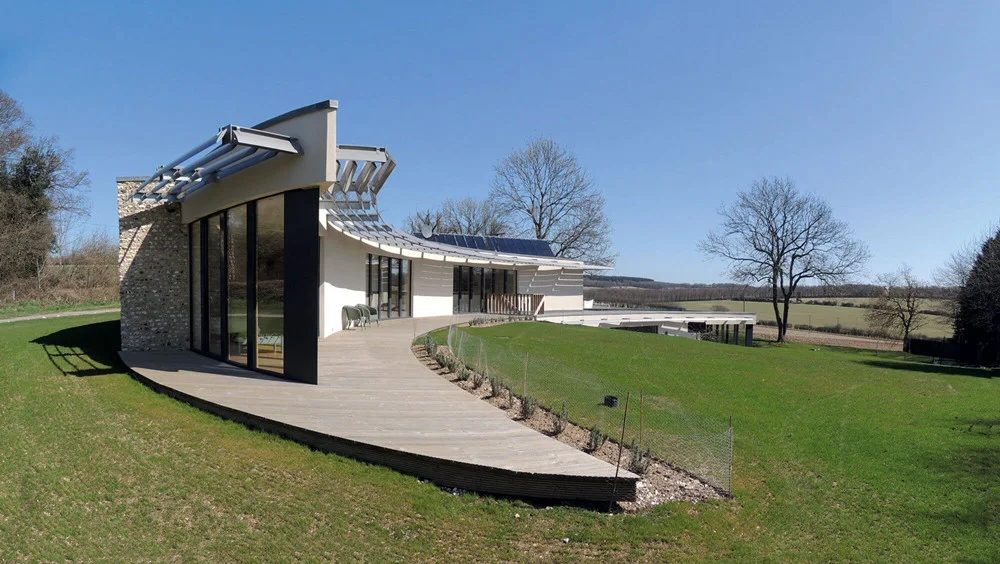
When it comes to design flexibility, both ICF (Insulated Concrete Forms) and concrete blocks offer unique advantages. Understanding how each material can impact a building’s design, aesthetic, and functionality helps in choosing the most suitable option for your project, whether it’s residential, commercial, or industrial.
- Aesthetic Versatility: ICF can be finished with a wide variety of exterior materials such as stucco, brick, or siding, allowing for more aesthetic choices and design flexibility. Concrete blocks can be finished with paint or cladding, but the inherent appearance of the blocks may limit some design possibilities for those seeking a more customized look.
- ICF Design Flexibility: ICF allows for a wide range of architectural designs due to its ease of shaping and forming. It can be easily molded into various curves, angles, and custom shapes, offering greater creative freedom. This flexibility is ideal for projects requiring unique or complex design elements without compromising structural integrity.
- Concrete Block Design Flexibility: While concrete blocks provide a solid and durable foundation, their design flexibility is more limited compared to ICF. Concrete blocks are typically rectangular and have fewer customization options. However, they can be used effectively in many traditional architectural styles, offering simplicity and reliability.
- Thermal Mass and Energy Performance: ICF’s solid concrete core provides better thermal mass, helping to regulate indoor temperatures more effectively. This means that buildings made with ICF can maintain a more consistent temperature throughout the year, contributing to overall energy efficiency. Concrete blocks, while offering some thermal mass, typically require additional insulation to achieve the same energy performance.
- Sound Insulation: ICF’s combination of foam and concrete offers superior sound insulation compared to concrete blocks. The foam layer acts as a sound barrier, reducing noise transmission between rooms and from external sources. Concrete blocks, though sturdy, require additional soundproofing materials to achieve the same level of noise reduction.
How to Choose ICF and Concrete Blocks?
Choosing between ICF and concrete blocks depends on your project’s climate, budget, structural needs, and construction timeline. ICF is best for energy-efficient, fast-building walls, while concrete blocks suit traditional masonry projects and lower upfront material budgets.
Key Factors to Consider
- Long-term maintenance: Choose ICF if you want a wall system with fewer joints, strong resistance to pests and moisture, and reduced maintenance needs. Choose concrete blocks if you prefer a durable masonry system and can manage occasional repointing, sealing, and surface repairs.
- Climate and energy goals: Choose ICF if you want continuous insulation and lower heating and cooling costs, especially in hot, cold, or mixed climates. Choose concrete blocks if thermal mass is sufficient and you plan to add insulation separately to meet local energy codes.
- Project budget: Choose concrete blocks when upfront material cost is the main priority and skilled masonry labor is available. Choose ICF when you can invest more initially to reduce insulation expenses, speed up installation, and potentially save on long-term energy bills.
- Construction schedule: Choose ICF for faster wall assembly because its lightweight foam forms interlock without mortar and are filled with concrete after stacking. Choose concrete blocks when the schedule can accommodate the slower, more labor-intensive process of laying and aligning each masonry unit.
- Structural requirements: Choose ICF for reinforced, monolithic walls that perform well in high winds, seismic zones, and areas with severe weather. Choose concrete blocks for foundations, retaining walls, and traditional structures where reinforced masonry and proven local building practices are preferred.
- Noise and comfort: Choose ICF when indoor comfort is important, because its foam-and-concrete combination improves insulation and reduces outside noise. Choose concrete blocks when sound control can be achieved through wall mass, added insulation, or interior acoustic treatments.
- Design style: Choose ICF for curved walls, custom angles, and modern designs that require flexible forming and continuous insulation. Choose concrete blocks for straight walls, basements, industrial buildings, and classic masonry appearances that benefit from standardized rectangular units.
Conclusion
In conclusion, both ICF (Insulated Concrete Forms) and concrete blocks offer distinct advantages, making them suitable for different types of construction projects. ICF stands out with its superior energy efficiency, thermal mass, and ease of installation, making it an excellent choice for energy-conscious builders. Concrete blocks, on the other hand, provide solid durability and strength, making them ideal for traditional construction applications.
Choosing the right material depends on your specific needs and priorities. If you’re looking for faster installation, better insulation, and long-term energy savings, ICF could be the ideal solution for your project. However, if budget and conventional construction methods are your main focus, concrete blocks offer a reliable, cost-effective choice.
For your next construction project, consider sourcing both ICF and concrete blocks from us. We offer materials tailored to your needs, ensuring that your building is strong, efficient, and built to last. Contact us today to get started!